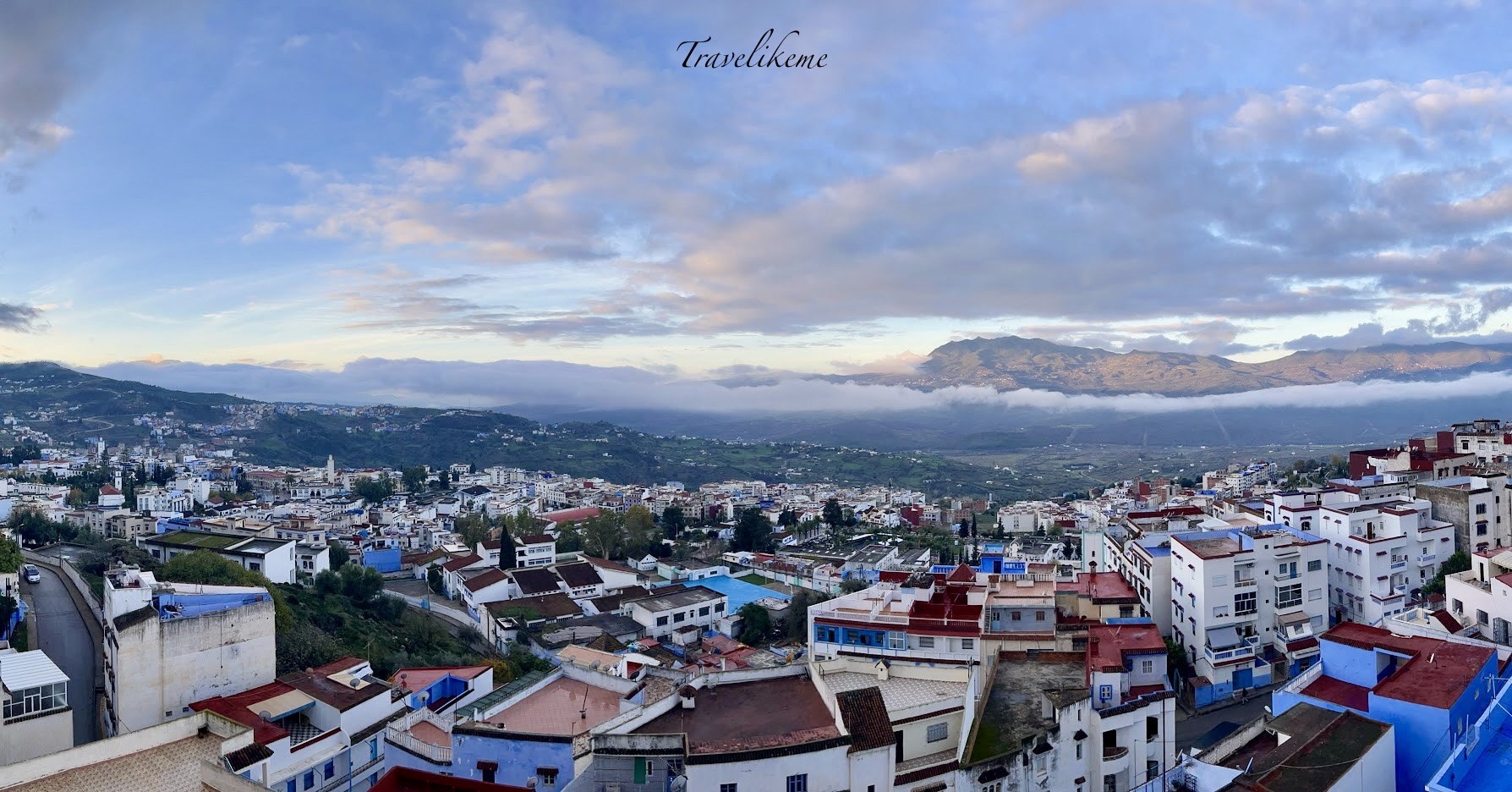
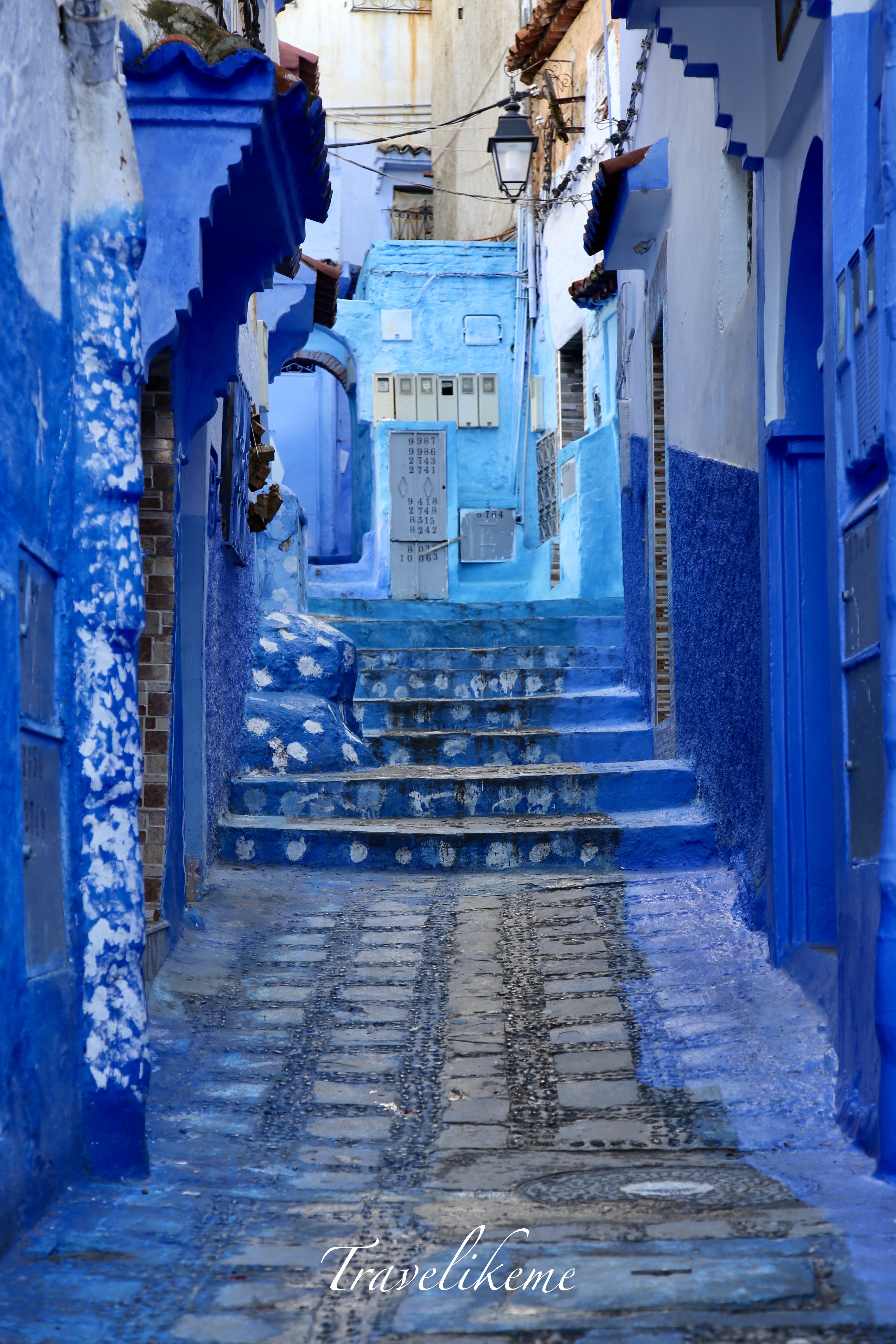
Chefchaouen, also known as Chaouen is a city in northwest Morocco. It is the chief town of the Province of Chefchaouen and is renowned for its buildings covered in different shades of blue. So it earned the nickname, the Blue City.
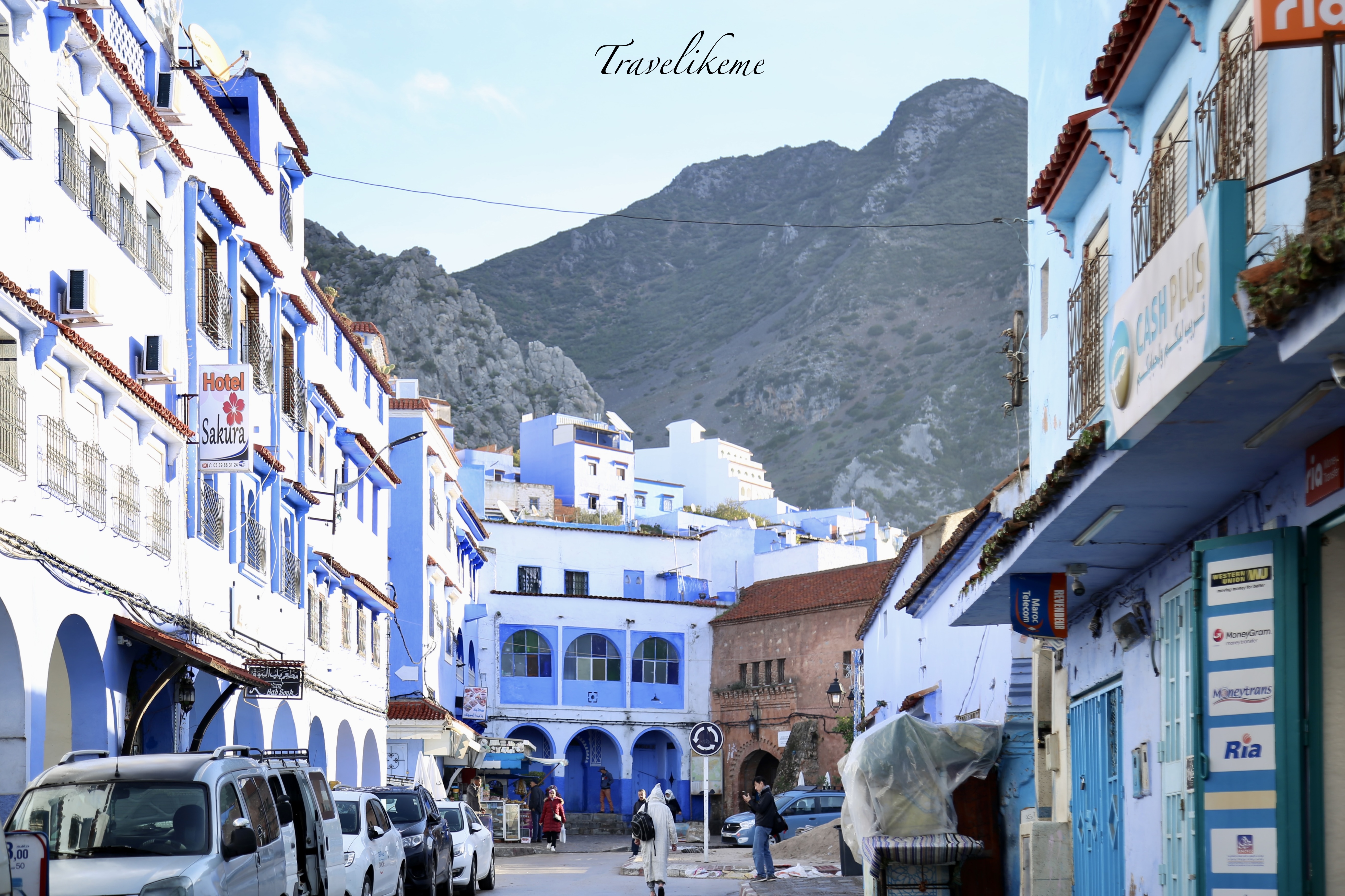
Chefchaouen is situated in the mountainous region in northern Morocco between Tetouan and Ouazzane. Sitting about 600m above sea level at the foothills of the Ka’ala Mountain in the western part of the Rif Mountain Range.
The advent of blue in Chefchaouen is a point of interest. One popular belief is that it keeps flies and mosquitos away. There’s a theory that Jewish refugees fleeing from Hitler in 1930 painted the buildings blue to symbolise the sky and heaven and it was a reminder to lead a spiritual life. Some locals say it was mandated in the 1970s that houses be painted blue to draw tourists. Whichever may be true is fine by me, as I love the colour Blue in all its spectrum!
The Blue Pearl of Morocco was founded in 1471 as a small Kasbah ‘Fortress’ by Ali bin Rashid al-Alami to defend against Portuguese invasions from the North.
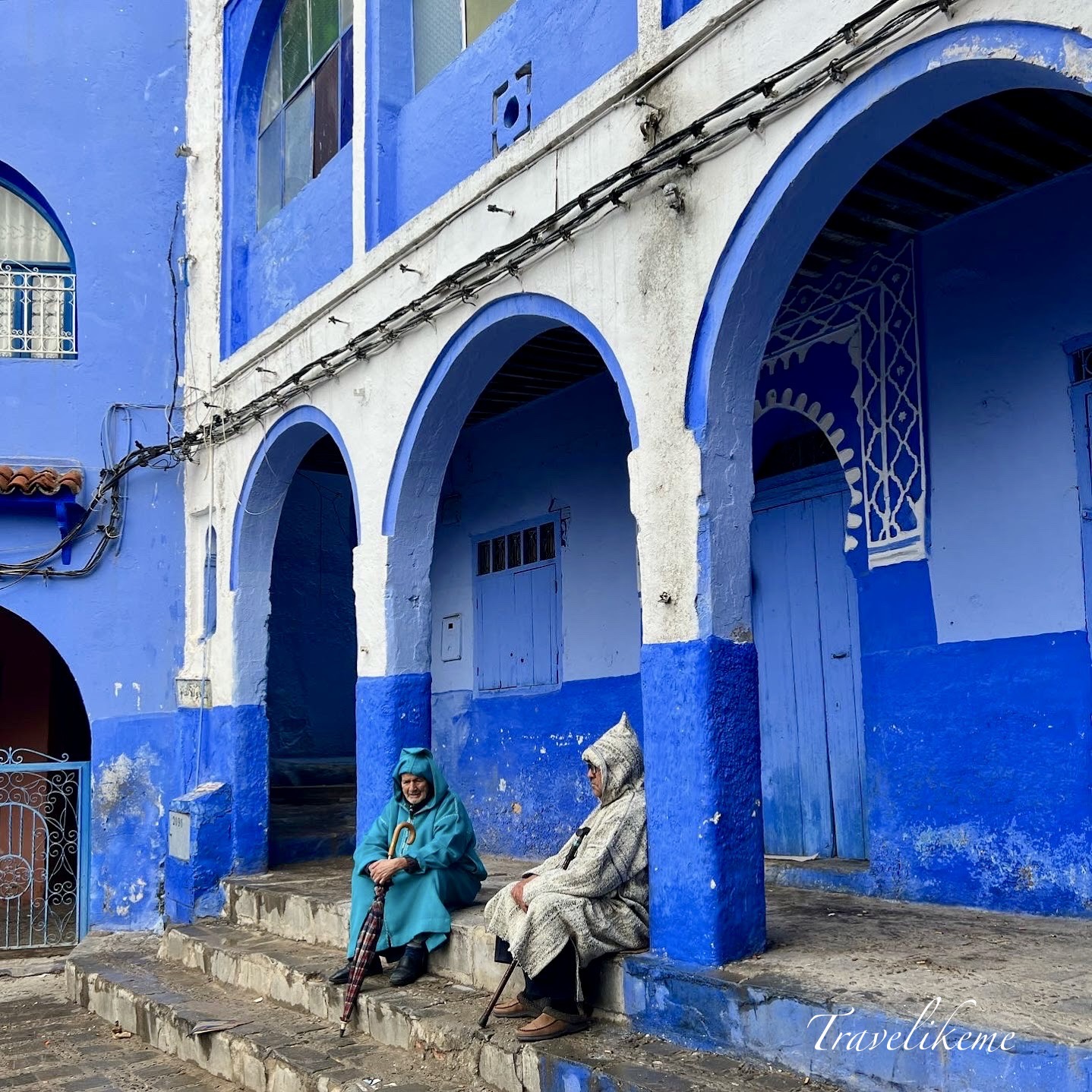
Two Moroccan gentlemen wearing their Djellabas, a long, loose fitting unisex outer robe or dress with full sleeves that is worn also in the Maghreb region (Western part of the Arab world including Algeria, Libya, Mauritania, Morocco and Tunisia) of North Africa. Almost all djellabas include a baggy hood called the ‘qob’ that comes to a point at the back. It protects the wearer from the sun and a shield against sand being blown into the wearer’s face by strong desert winds. In winter, it prevents heat loss through the head and protects the face from snow and rain. Traditional Djellabas are made of cotton for summer use and coarse wool for the winter, obtained from sheep in the surrounding mountains.
Along with the Ghomaras (a Berber tribal group) of the region, many Andalusi Muslims, Moriscos, Spanish and Portuguese Jews migrated to Morocco over the centuries during and after the Reconquista and with the fall of Granada in 1492.
Some of these refugees settled in the larger cities of Fes, Marrakesh, Tlemcen, Tunis and Kairouan whilst others chose to settle in the jihadist fortress of Chefchaouen which was in fierce battle with the Portuguese armies.
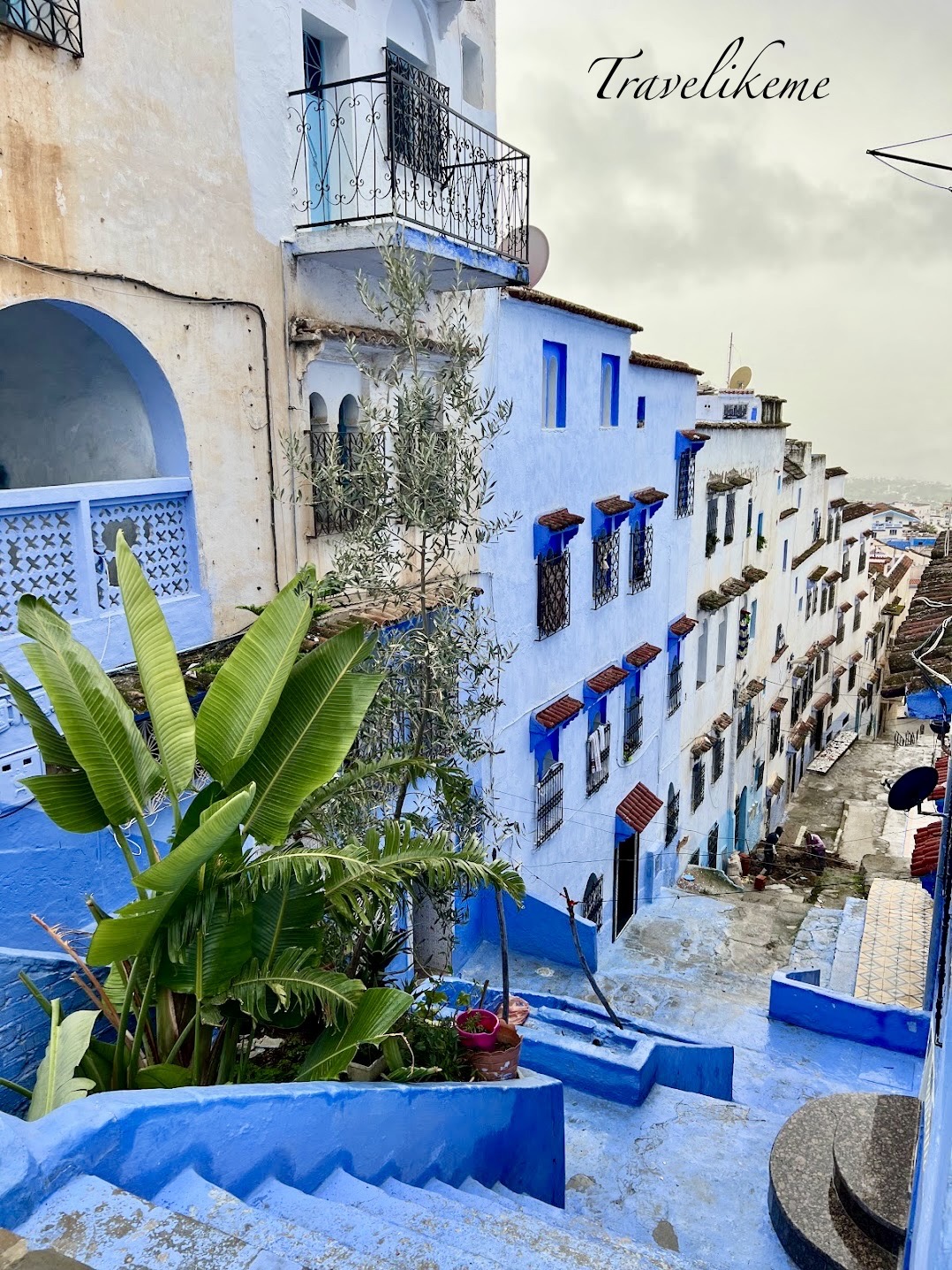
The settlers in Chefchaouen established their quarters on the rugged slopes of the mountain and built their residences in the Andalusia architectural style, similar to that of Granada. In a few decades the fortress of Chefchaouen turned into a prosperous new city and there was a merging of the Andalusia-Granadan culture with that of the Ghomaras (Berber tribal group).
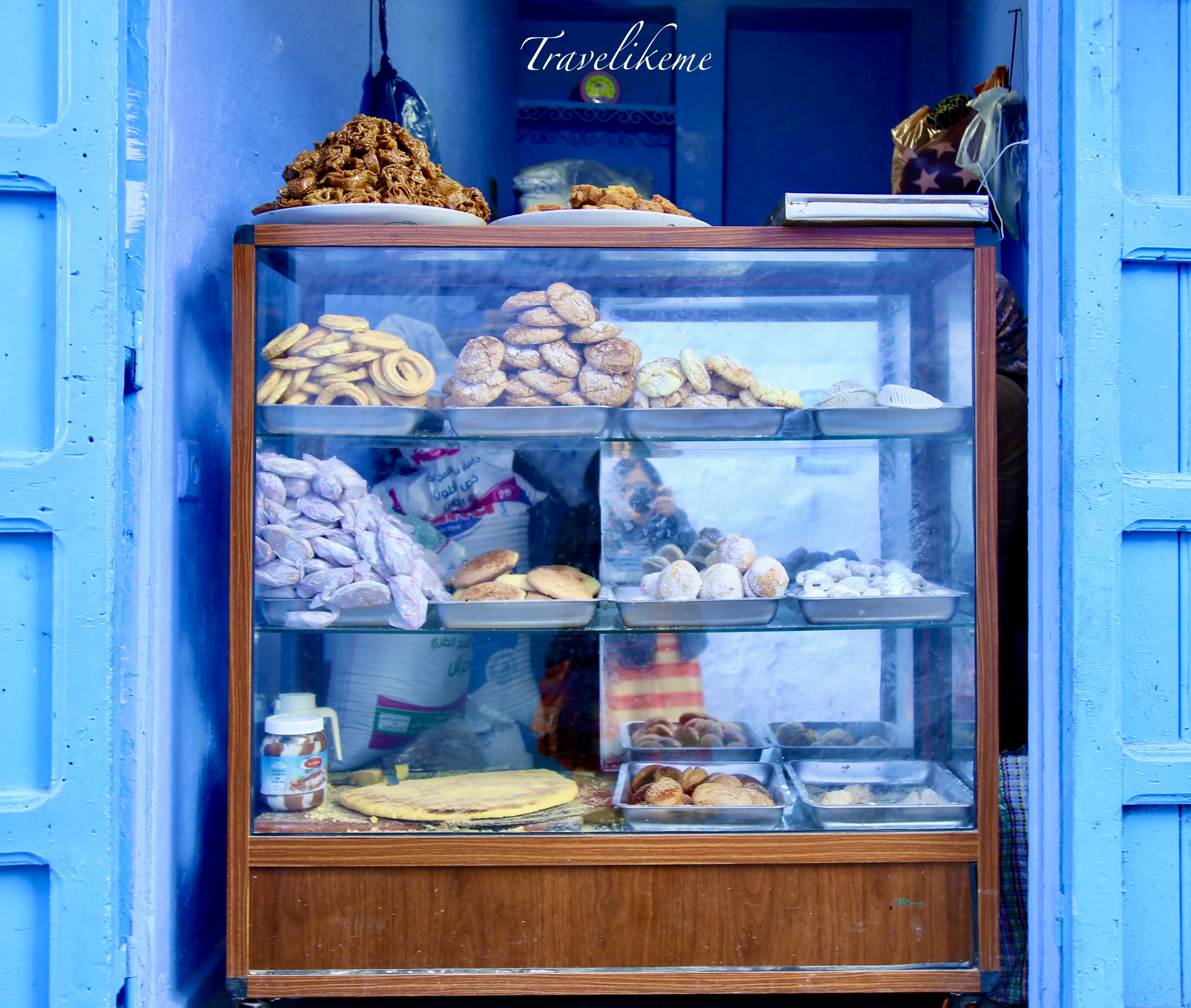
Halwa Chebakia – Moroccan Sesame Cookies with Honey, a delicious sticky sweet flower-shaped cookie. (tallest brown heap on the left). On the first shelf, some Ghoriba Bahla – Shortbread Cookies with Almonds and Sesame these cracked top cookies melt in your mouth and pack a nutty crunch. Next to it, is Baked Harcha which is Semolina Cookies with Anise, Raisins and Sesame. This cookies are crunchy and make a perfect afternoon tea time treat.
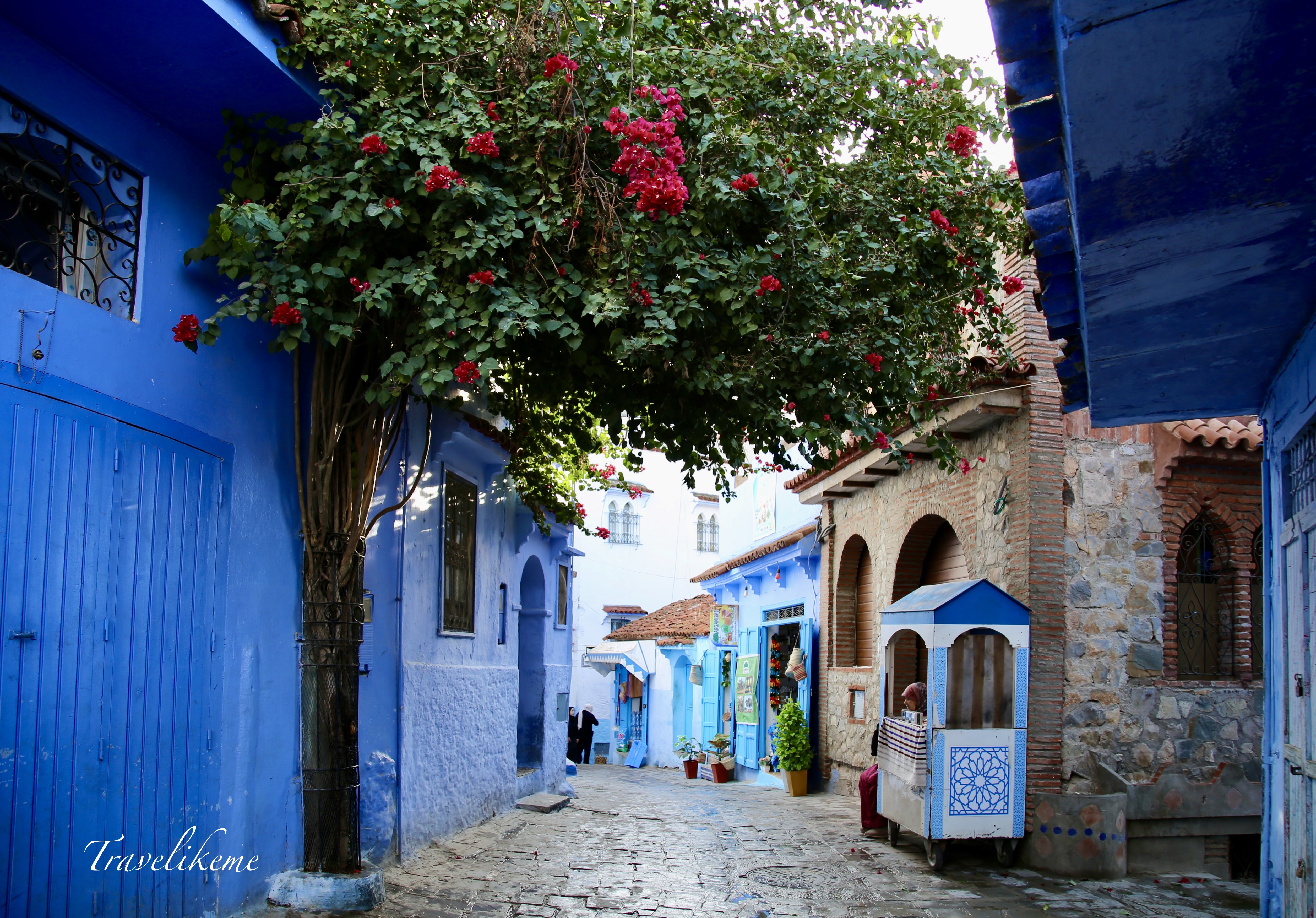
It is lovely just wandering around the maze of narrow alleyways to discover little nooks and corners that are just picture perfect and a photographer’s delight.
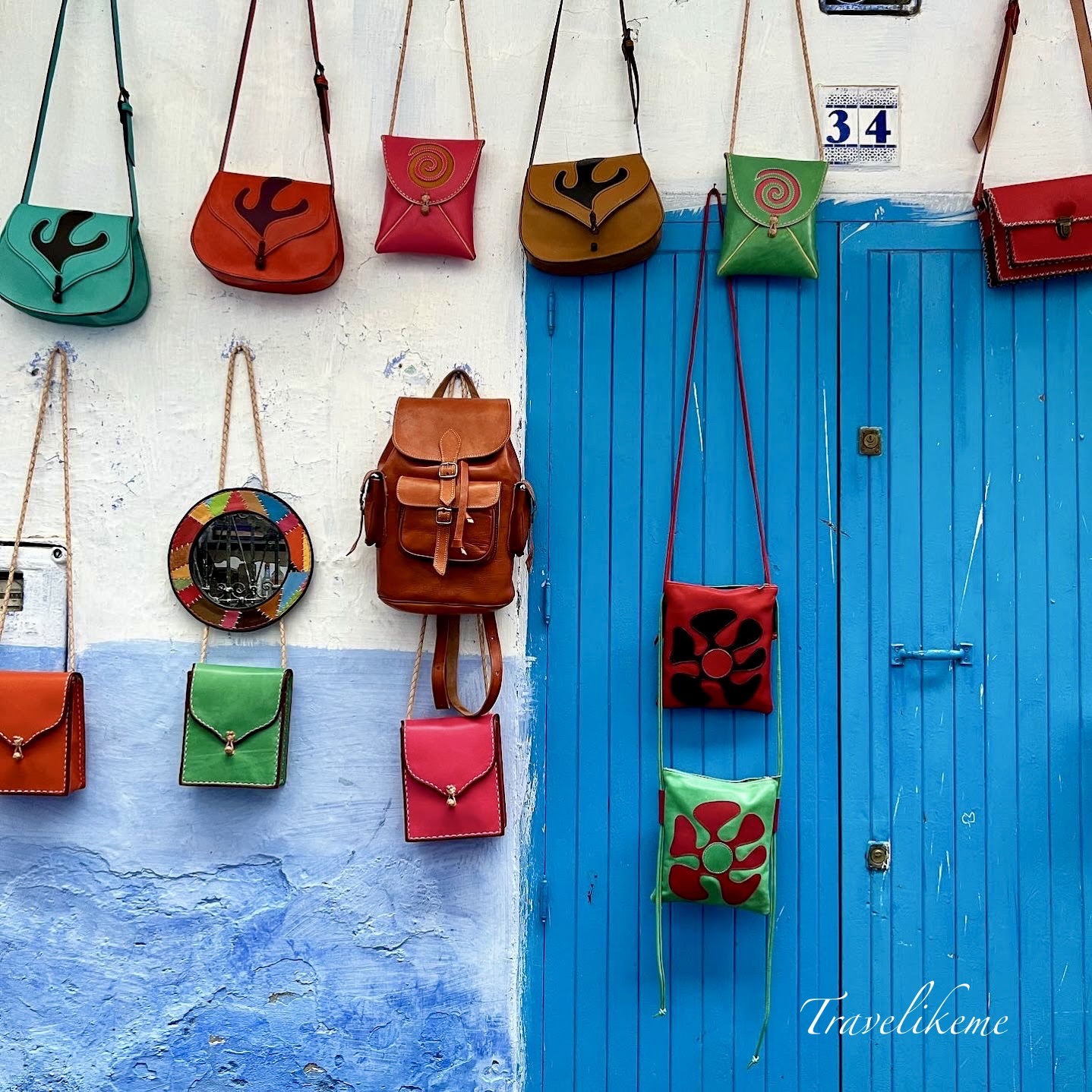
It was difficult for me to resist all these cute, colourful leather slingers in such an array of pretty colours and designs. I brought four home, though I was resolute at first about restraining myself from a buying frenzy.
A water fountain was usually found near the Mosque as cleansing by water was required in Ablution before prayers. This was also a water supply system for the town folks and in Muslim culture giving others a drink of water was an honourable form of alms.
This awesome building is Instagram worthy, being narrow and tall and standing between two other buildings. It is dressed up with planters and I could not help but stare at it for a long time, trying to take in all the interesting details. It’s almost like out of a fairytale story!
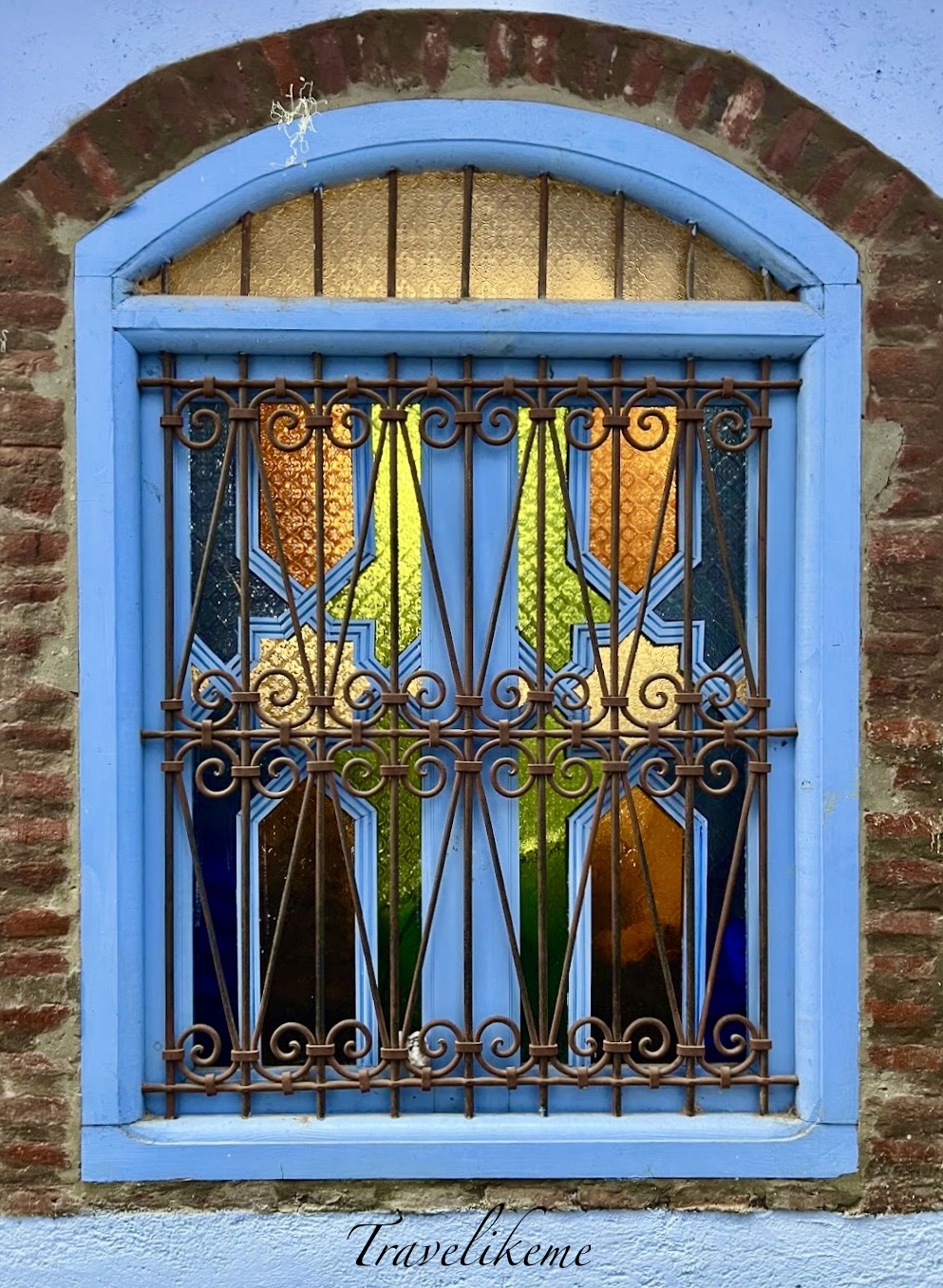
A pretty window with stained glass in Moorish design and the typical wrought iron grills.
Traditional Chefchaouen houses were made of Stone, brick, tile, wood, soil and lime. Each house had an open yard in the centre surrounded by corridors and bedrooms. The yards were usually decorated with fruit trees such as orange, lemon, berries and grapes as well as perfuming shrubs like jasmine.
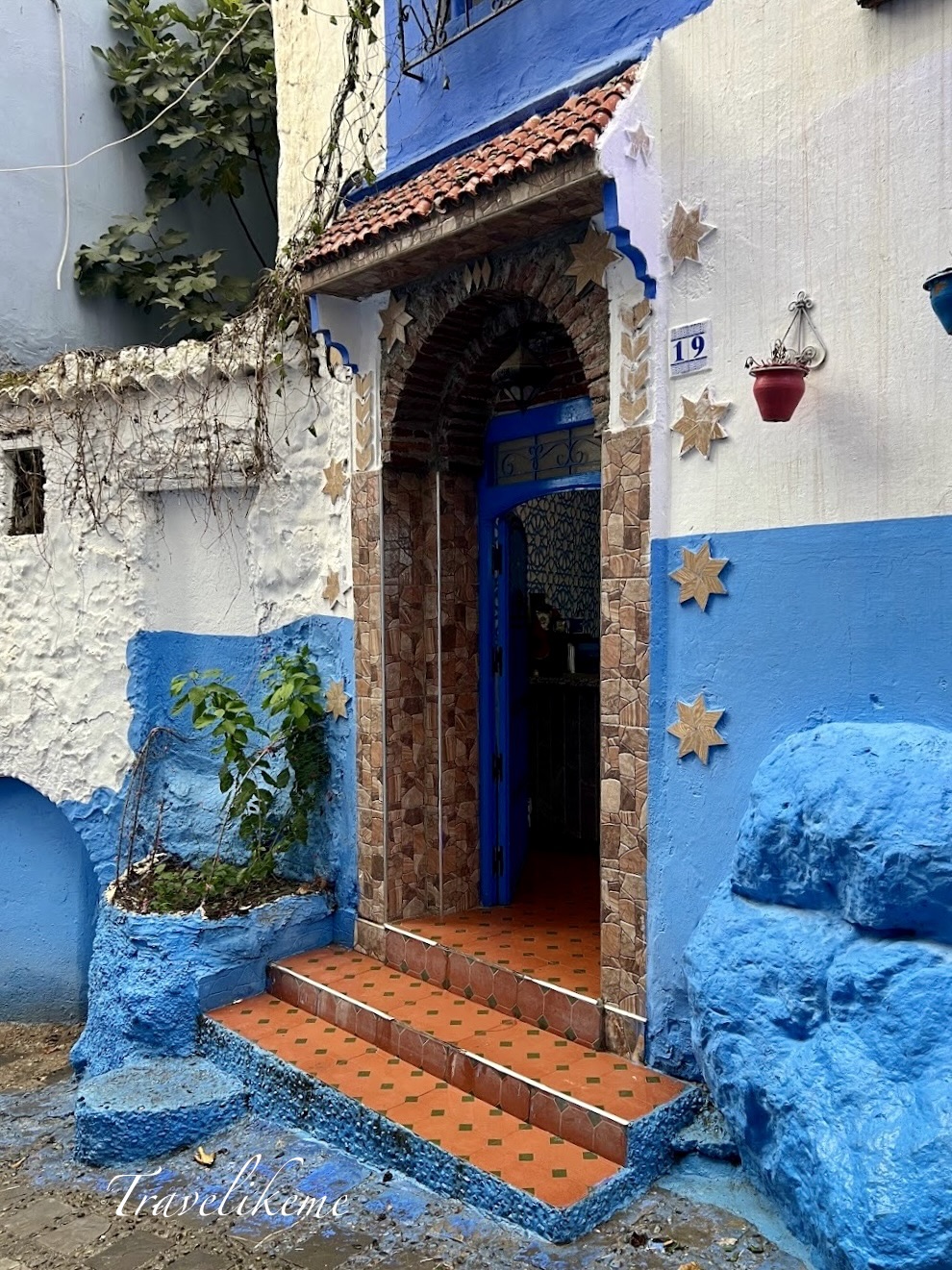
Attractive doorway with a character of its own. A trivia about Chefchaouen you might not be aware of is that tourists used to come here for Hashish or Hash – a resin extracted from the hemp plant or Cannabis which can give one the feeling of high when smoked. The Rif Valley region is where the largest growers and suppliers of hemp are. Morocco started production of Hash in the 1960s for international trade and while Morocco held a quasi-monopoly on hashish in the 1990s with their 250g ‘soap bar blocks’ which were affordable and of low quality. Afghanistan is now regarded the biggest producer of higher quality hashish.
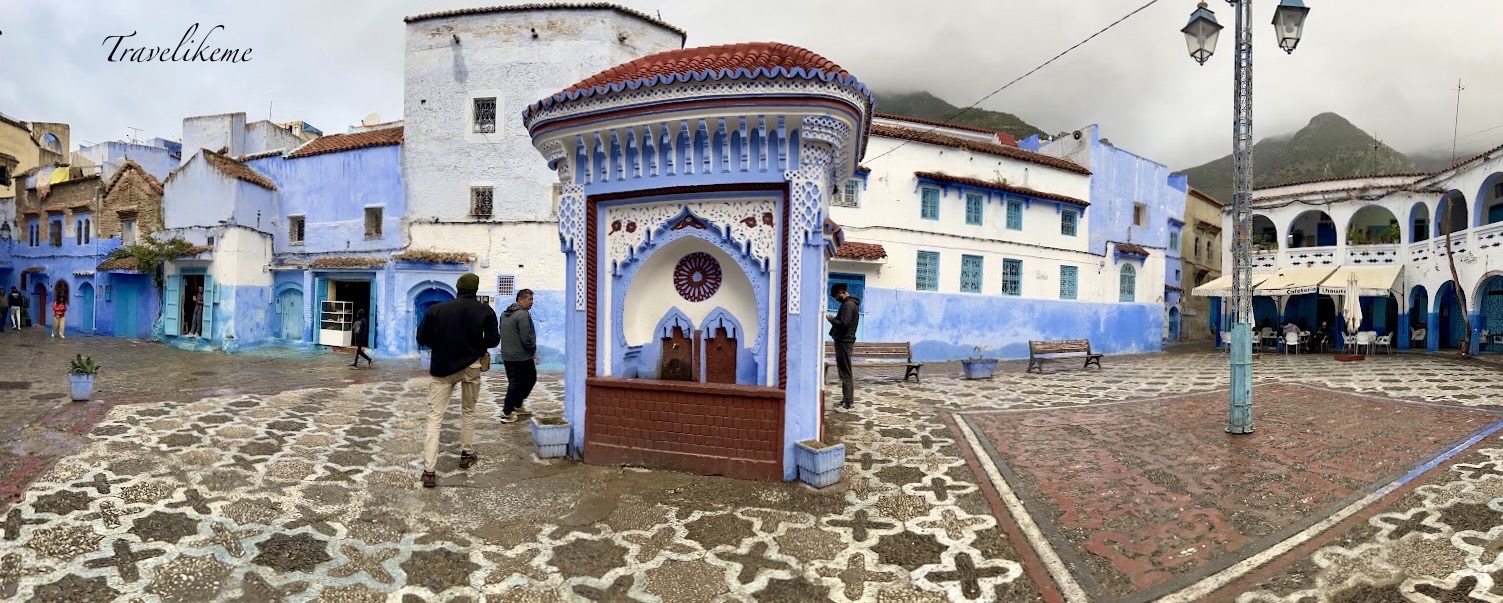
Panoramic view of the picturesque square, Place de la Haouta at Rue Chefchaouen and the pretty 4 sided water fountain where the locals get drinking water. The architecture is unique with mainly blue and white buildings featuring classic arches and iron grills with beautiful patterned flooring. As the name ‘Hawta’ implies ‘surrounded’ or ‘walled in’, this square is encircled by buildings on every side within the Medina.
Agriculture is an important part of Chefchaouen’s economy. A traditional subsistence agriculture is practiced on the hillsides and valleys with olives being the main crop. Other crops like grape vines, almonds and figs are still cultivated although cannabis monoculture has become easily more profitable with the influx of tourists in recent decades.
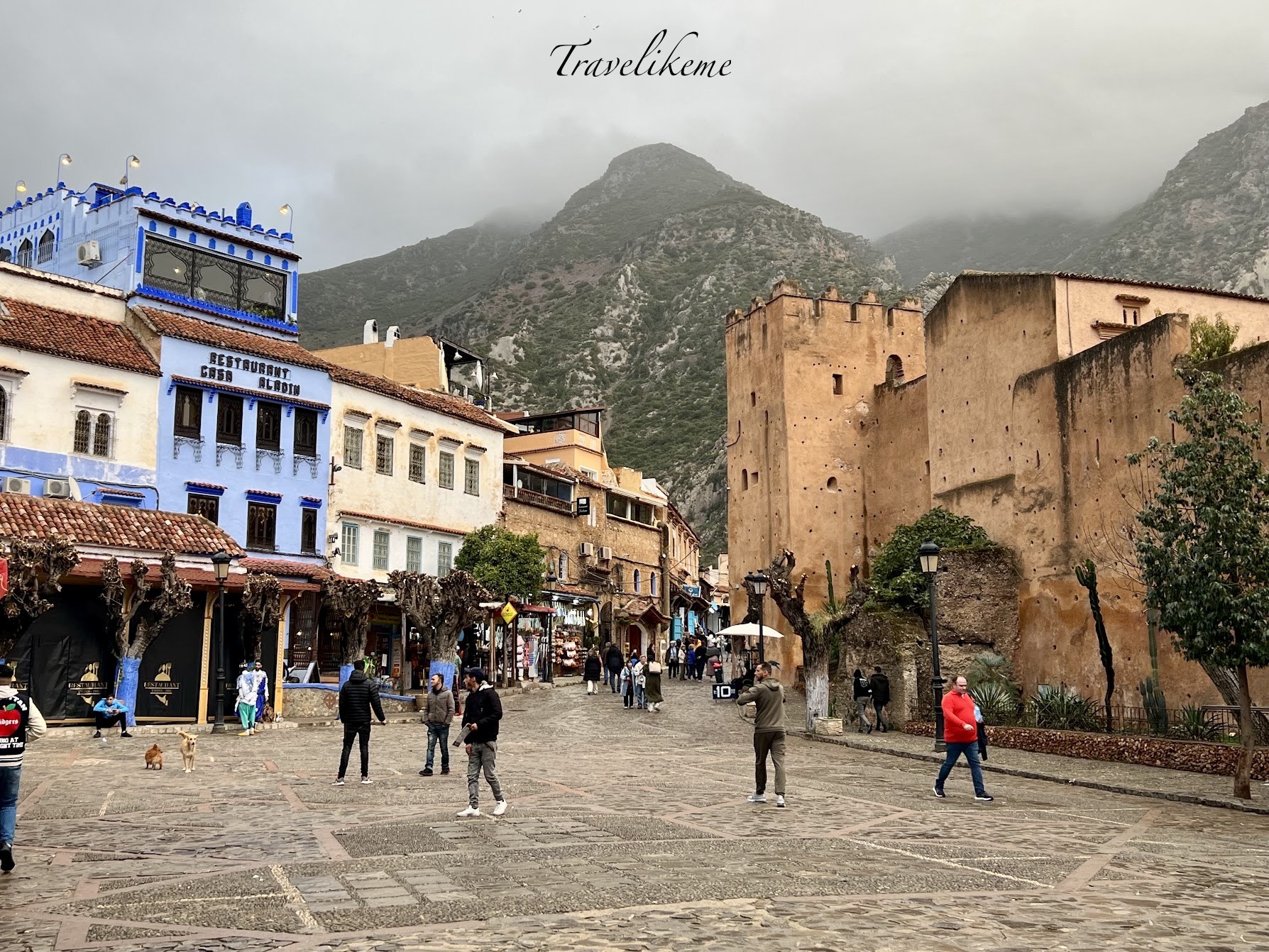
Uta Hamman Square or Place Outa Hamman, is the main square at the heart of the Medina. It was probably created by Moulay Muhammad in the 16th century and takes its name from the Hamman (public bathhouse) in the northwest corner of the square. This plaza is surrounded by the most important buildings in the old town, the Kasbah, the Great Mosque and a Caravanserai as well as shops and restaurants.
Chefchaouen is an interesting city to visit because of its rich history, artisanal crafts, beautiful landscape and local culture that has been influenced by the mixture of Andalusi and Ghomara peoples. The Medina is still well preserved and a more modern townscape flourishes outside its old city walls and the captivating blue colour that unifies it all.







 travelikeme