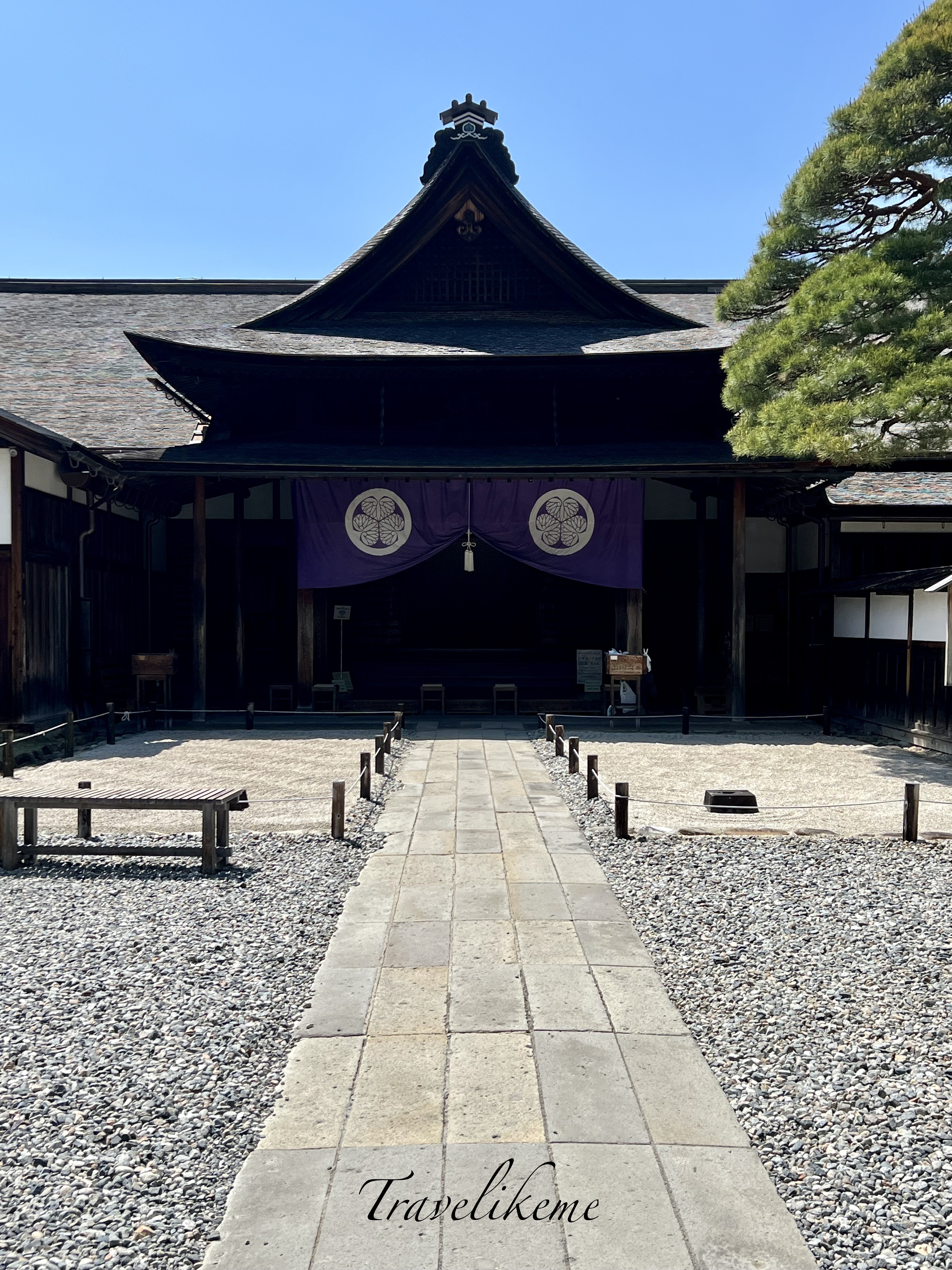
This is the main entrance to Takayama Jinja 高山陣屋 which served as the local government office headed by officials dispatched from Edo during the Tokugawa Shogunate 徳川幕府 (Tokugawa Bakufu) which was in power from 1603-1867.
The Hida region 飛騨 around Takayama 高山 was rich in natural resources and also for its valuable timber; thus it was put under direct control of the Tokugawa Shogunate in 1692.
The granite chip gravel in this Zen garden represents water. The monks rake the sand meticulously each day as a form of meditation and the intricate designs fit in with the elements of the rock garden representing the flow of water.
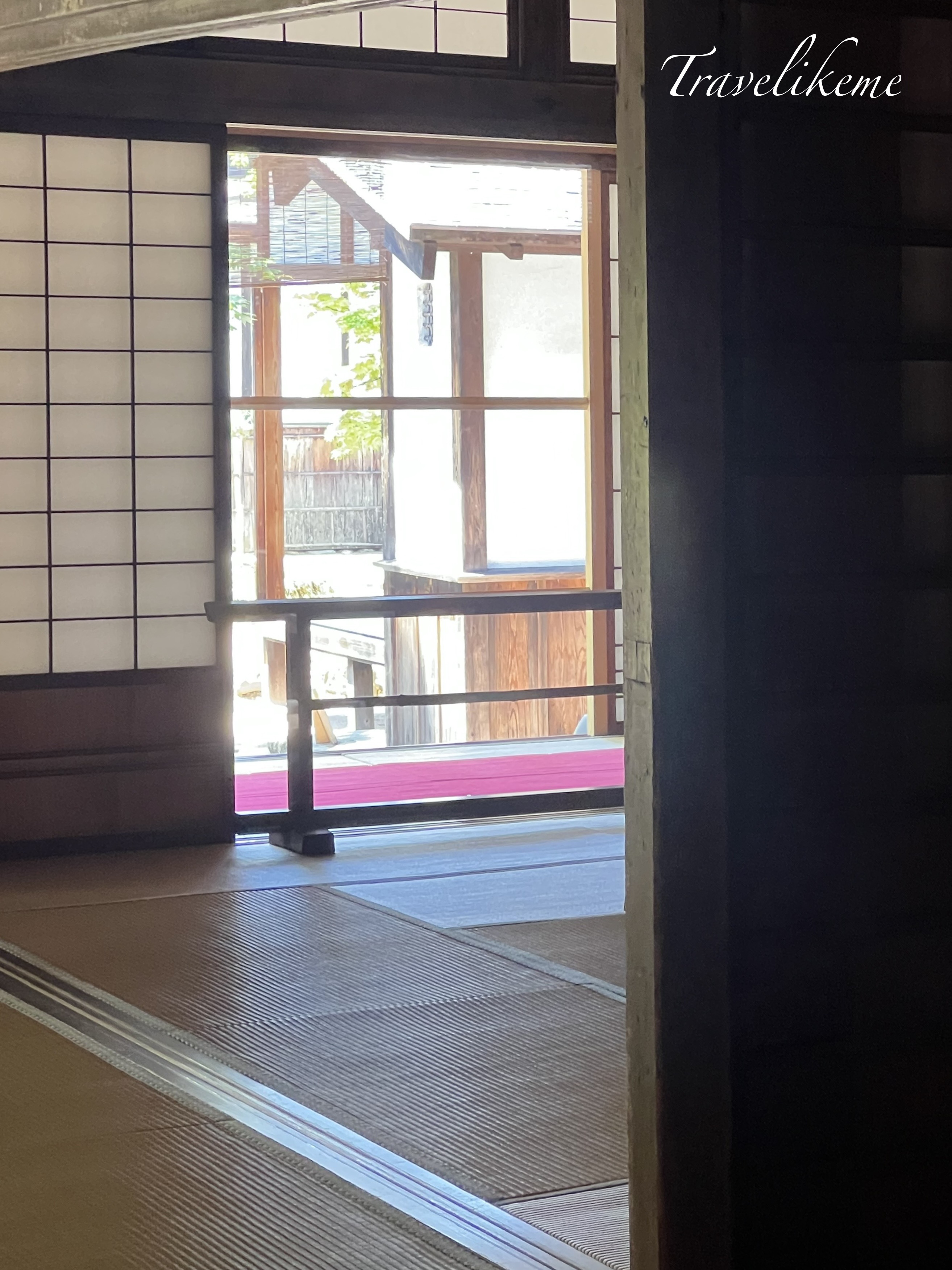
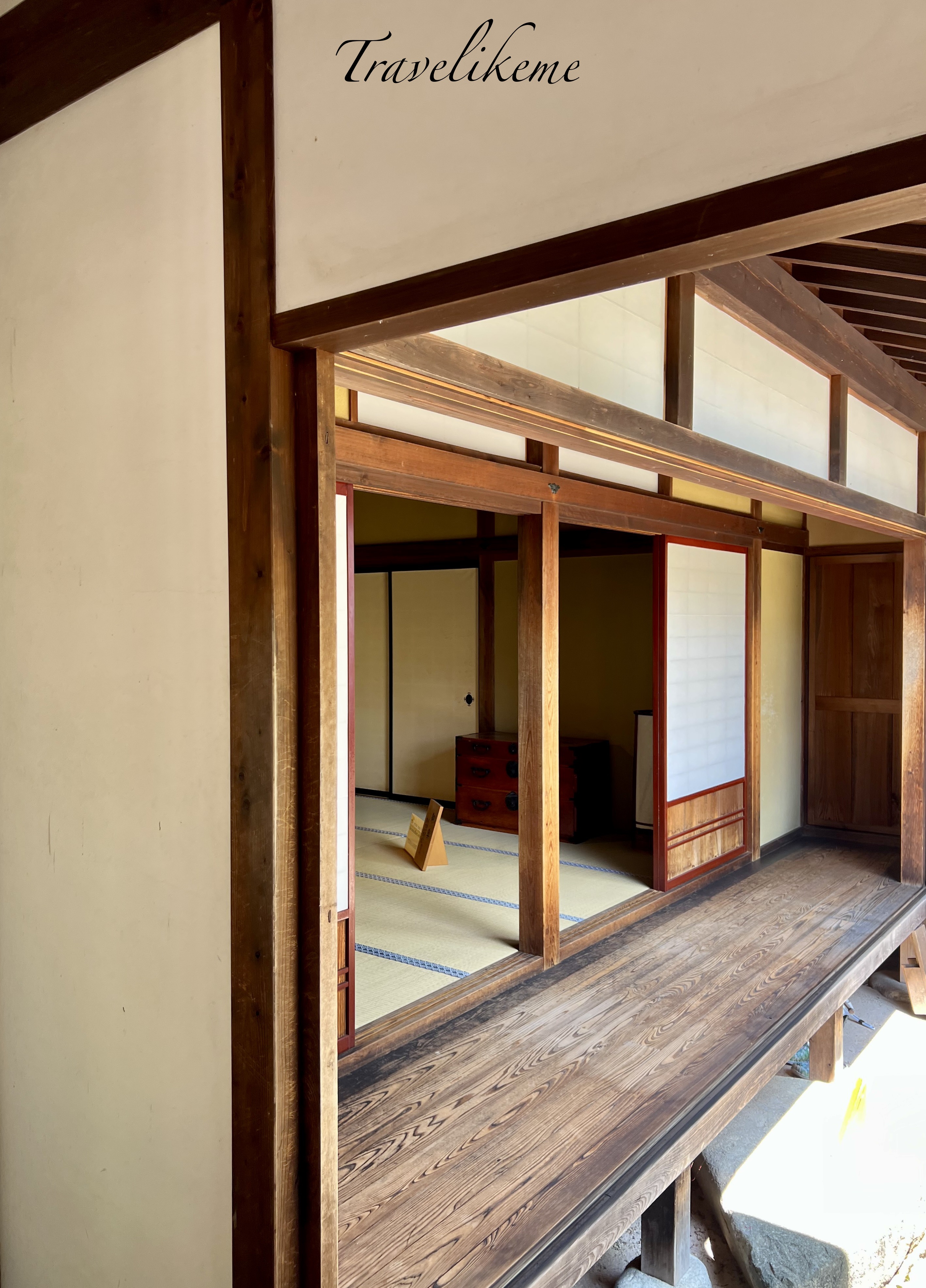
Peeking through the Shoji doors 障子that is widely used in Japanese architecture. They slide open, separating the interior from the exterior and are made of a latticed wooden frame covered with a tough translucent bleached or unbleached mulberry paper. When closed, a diffused light comes through giving the rooms a warm atmosphere.
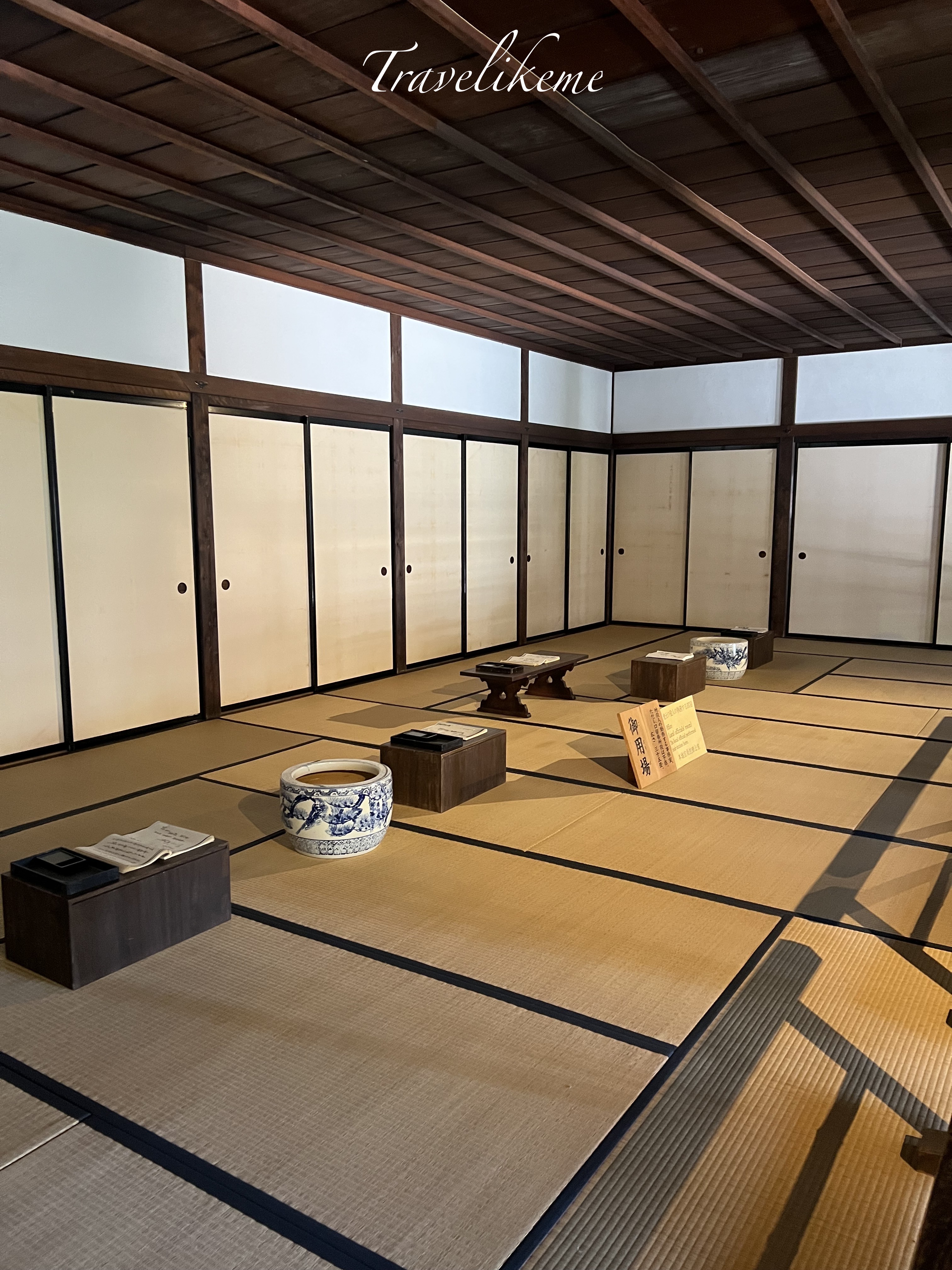
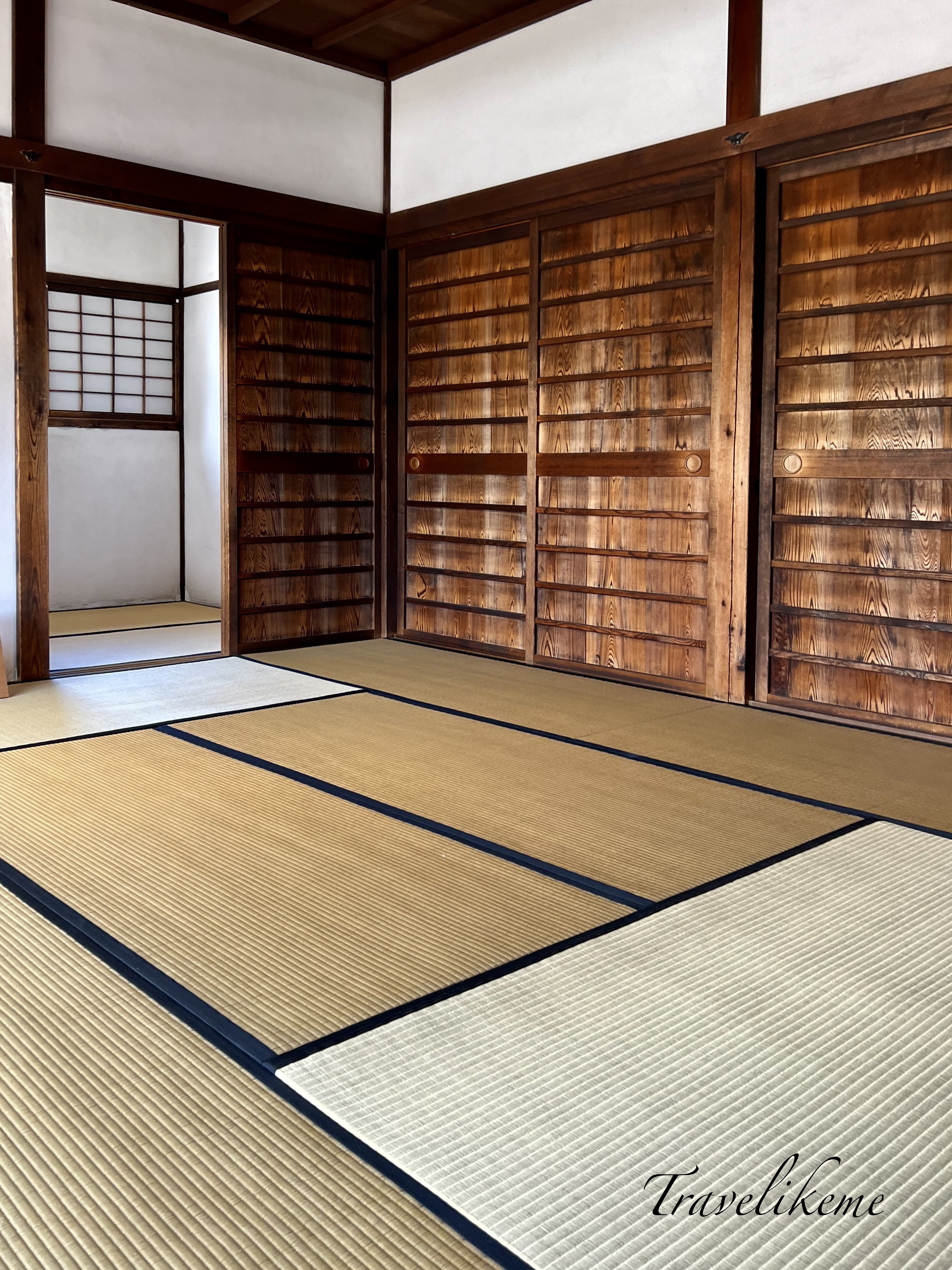
Goyouba 御用場 This is the room where official business is carried out. Notice the different doors used here – these Fusuma 襖 are opaque sliding panels that gives more privacy and serve both as a door and wall.
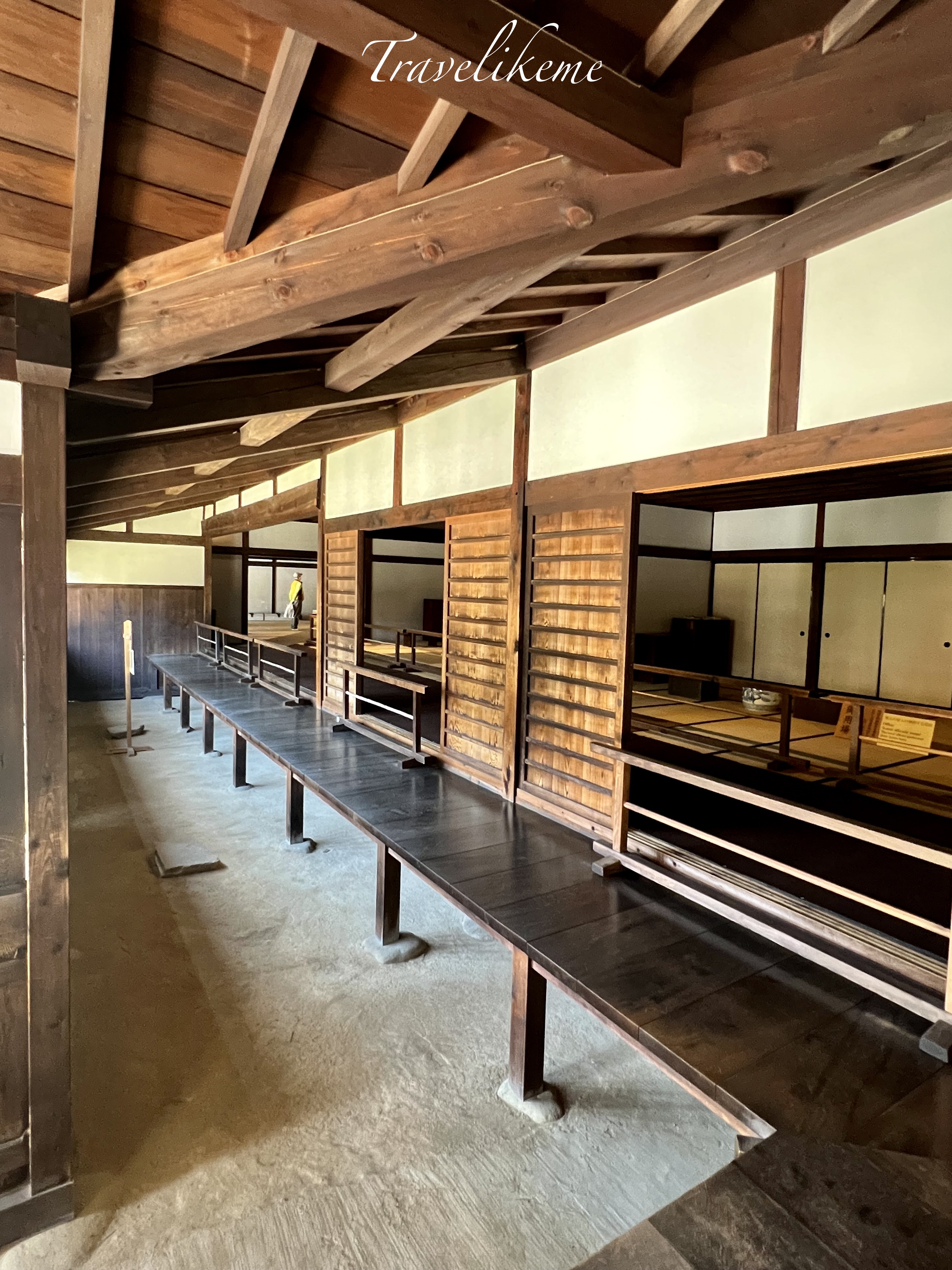
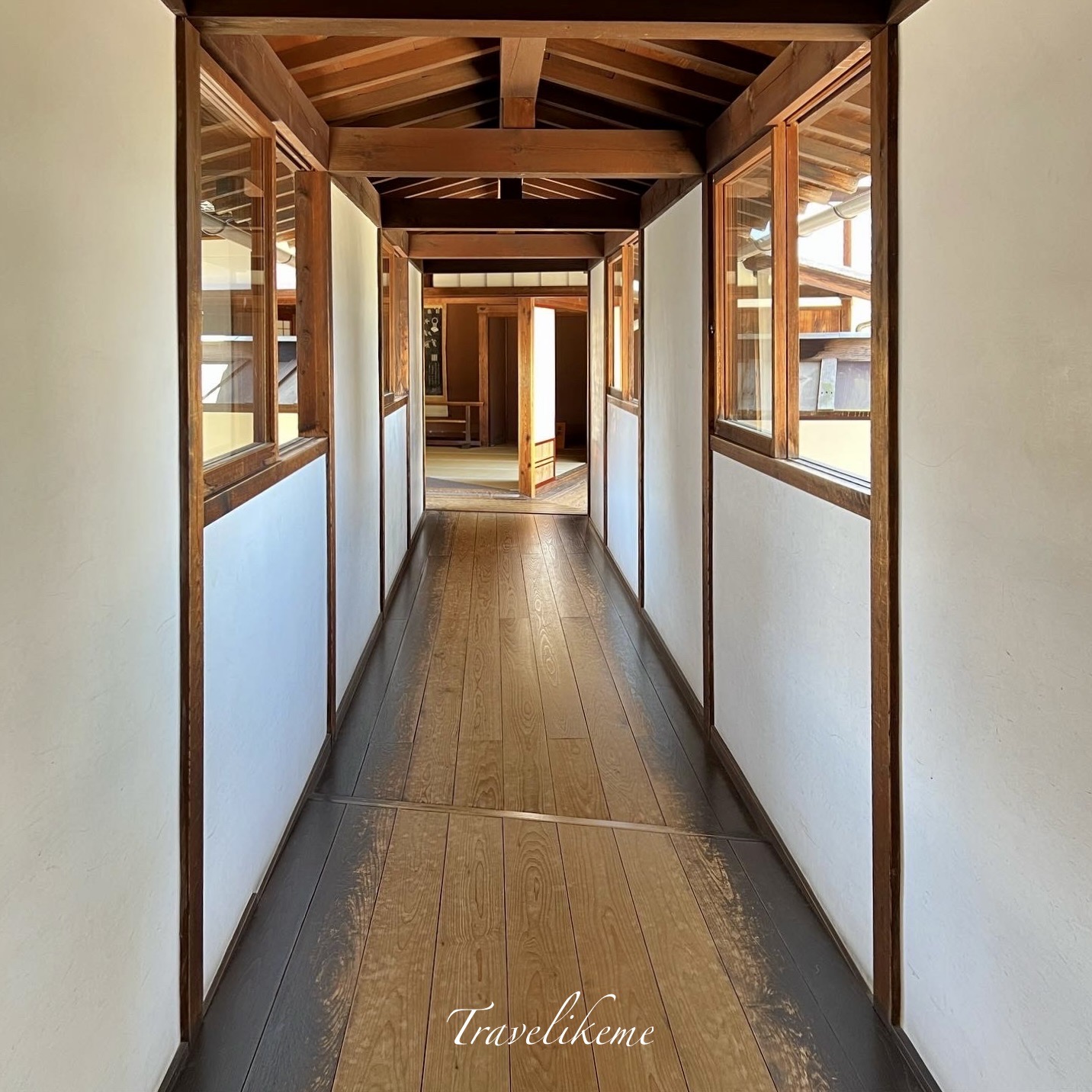
Japanese architecture bears clean lines, is pared down but dignified without unnecessary embellishments. The timber wooden frame, vertical columns, horizontal beams and diagonal braces are left in their beautiful natural colours. Another characteristic of Japanese buildings is that they are elevated slightly off the ground with tiled or thatched roofs and sliding doors.
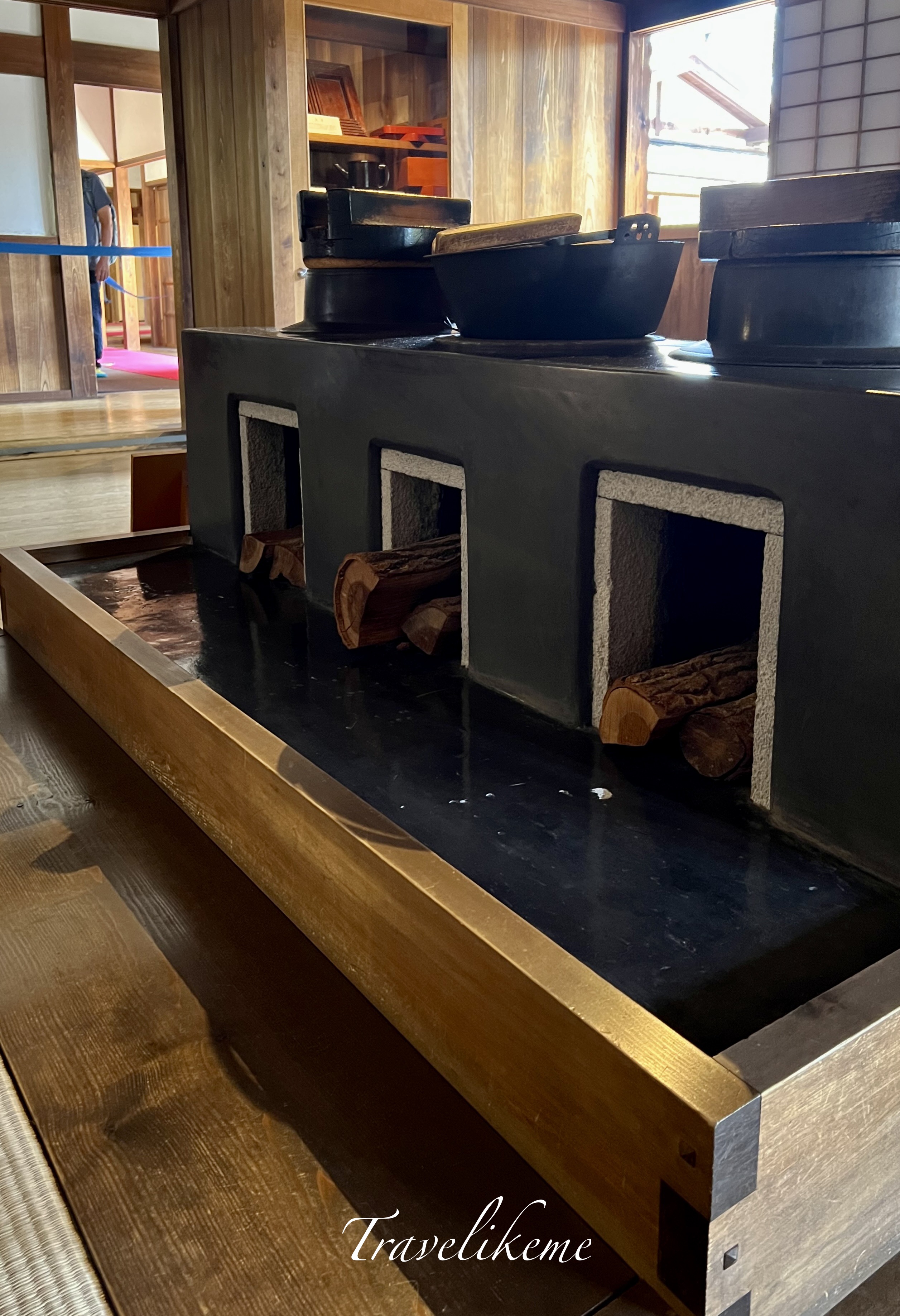
A fire place in the Kitchen area to keep warm during the colder months and perhaps have a hot cup of tea.
Tatami mats work well in the unique climate of Japan which is hot and humid in summer and cold and dry in the winter. They help regulate interior humidity and also compliments other cultural traditions in Japan like going barefoot at home, sitting and sleeping on the floor. Tatami made of good core materials namely straw or rice husk can last up to 50 years. The fabric cover is typically made of cotton.
The Jinja complex includes work spaces, residential areas and storehouses for rice which was paid as a tax to the Shogunate.
Mino 蓑 is a traditional Japanese raincoat made out of straw. It is an outerwear used to cover the body as a protection from rain and snow. Takayama does get quite a bit of snow typically from November right through to March.
The cooking stoves in the Kitchen area is now part of the Storehouse area built in the 1600s to serve as a rice storehouse. It now functions as a museum where exhibits include the belongings, official documents of past local leaders, old maps of the Hida Region and historic town plans amongst other things.
A little bit of green spaces in the large building complex. Even the gardens are kept immaculately neat.
The main business of the Governor was conducting legal trials and collecting taxes. Takayama being well known for its abundant forest to produce timber and other underground natural resources for gold, silver, copper and lead was why it was put under direct control of the Shogunate, for it was an important economic area.
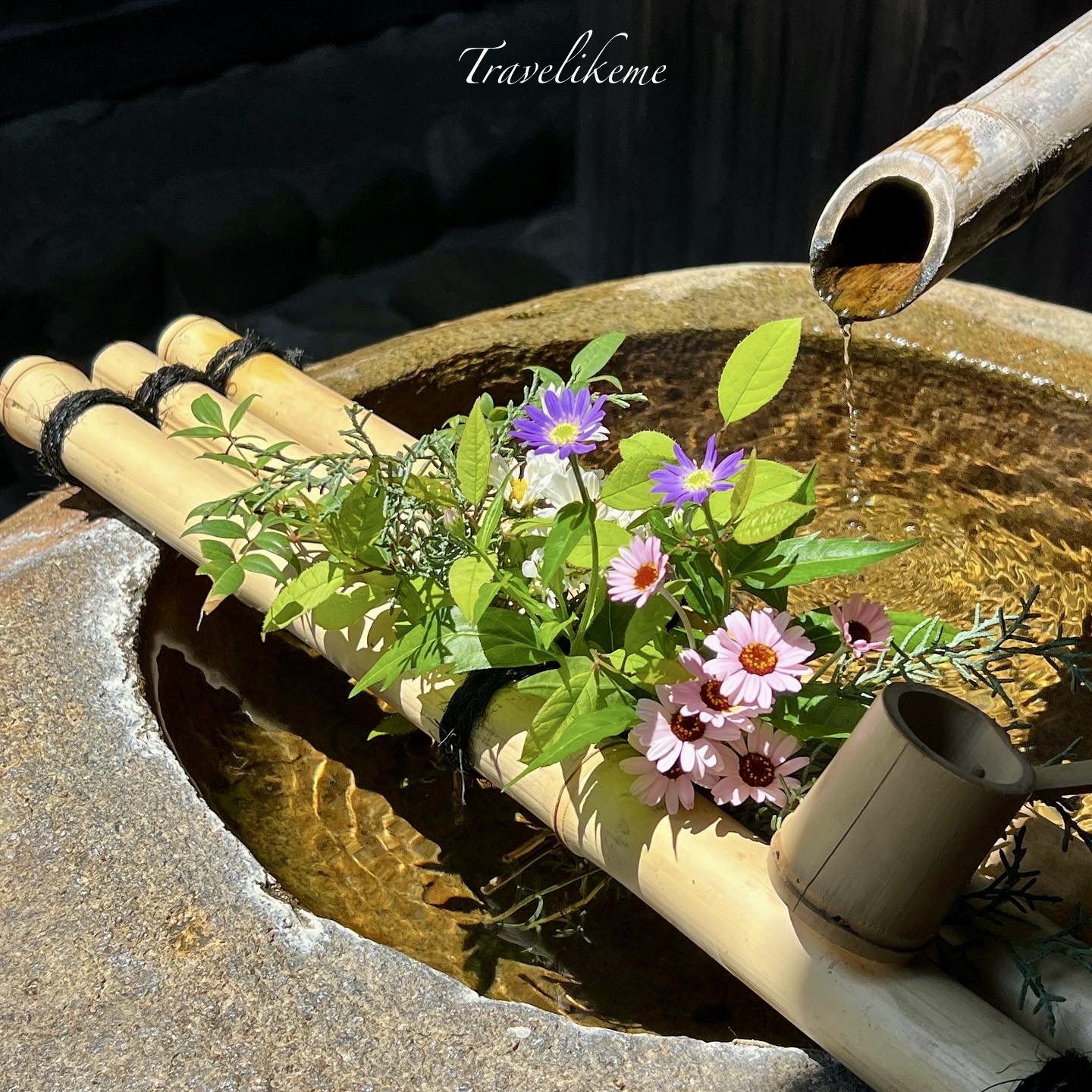
Japanese art and craft embodies a simplicity that blends with nature and the surroundings and it is outstanding and beautiful, as seen in this flower arrangement sitting on the bamboo poles straddling a tiny water pond.
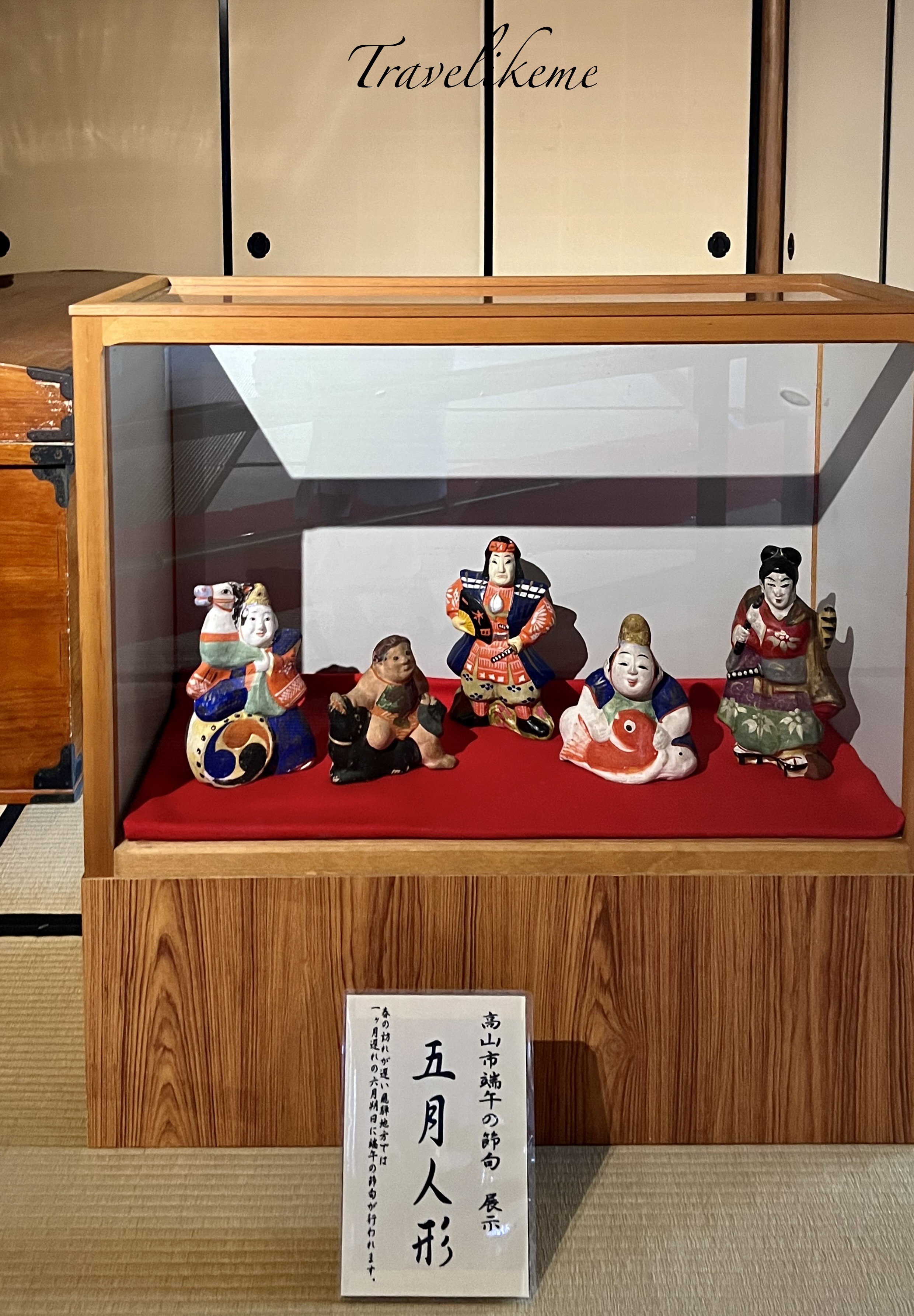
Gogatsu Ningyo 五月人形 This pottery decoration made of clay depicts traditional samurai doll figurines and act as lucky charms to pray for healthy growth and success in the life of a boy on Children’s Day which falls on May 5th.
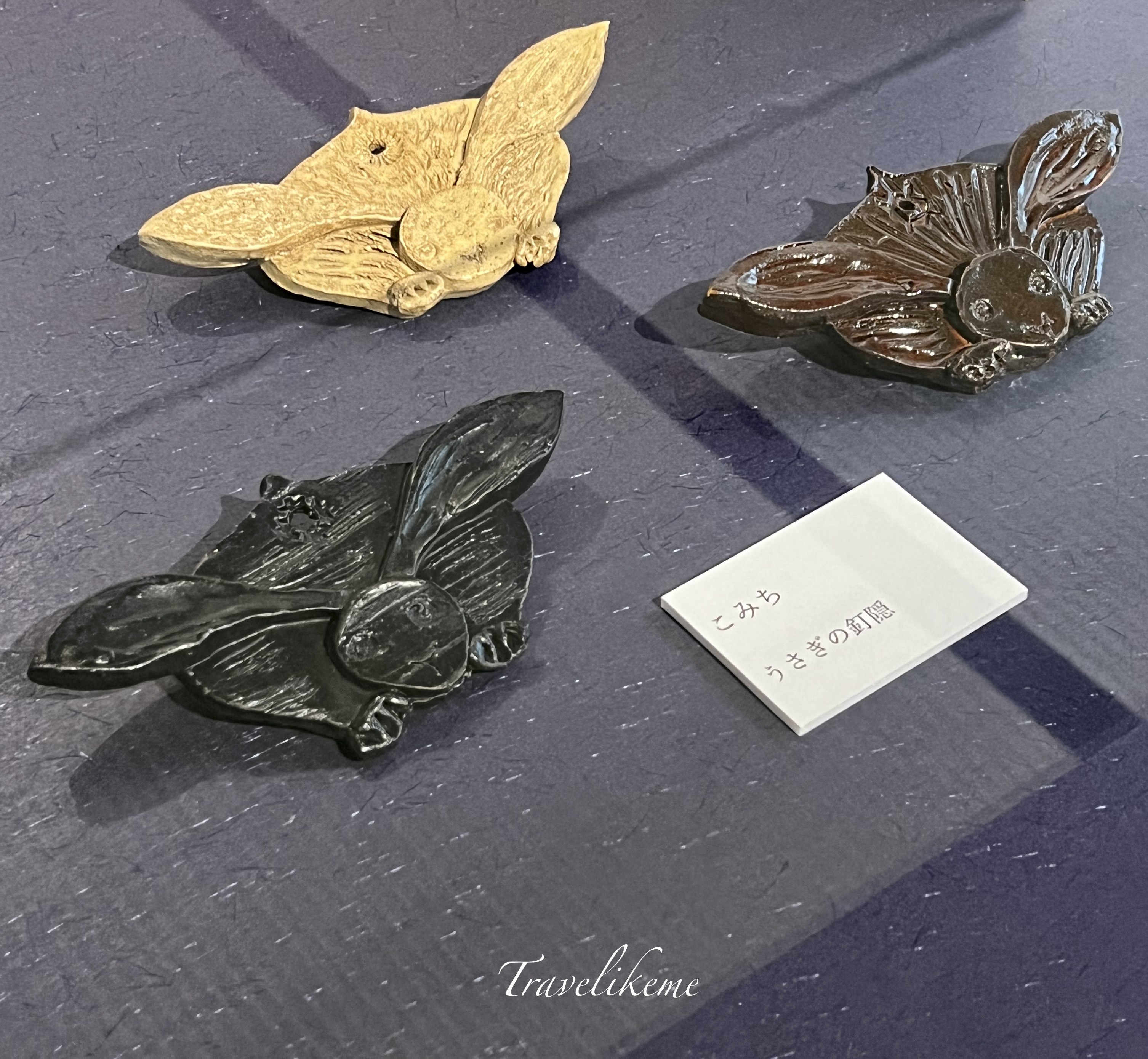
Interesting decorative rabbit-Usagi 兎 motif plaques for nails used in the Jinya complex. In Japanese culture, the rabbit is considered a lucky animal and it symbolises cleverness and devotion. It is also associated with spring signifying birth, growth and renewal.
Rustic bales of rice straw which is often spotted stacked at the entrance to traditional Japanese buildings, restaurants and bars. They have other useful practical uses as well and can be used in community perimeter walls and highway sound walls. Serve as animal bedding and feed. Erosion prevention straw bales, soil regeneration via composted rice straw and Ethanol and power generation.
Takayama Jinja 高山陣屋 served as the Daikansho 代官所for Hida Province under the Tokugawa Shogunate of Japan from 1692 to 1871 which is today located at Hachiken-machi in the city of Takayama高山 in Gifu Prefecture 岐阜県. It has been a protected National Historical Site since 1929.
It is so well preserved that walking through it, you can get a sense of what life in the Edo Period (1603-1868) was like. This is the only remaining site in Japan of a Provincial Governor or Magistrate’s Office where the Main building still stands.







 travelikeme