Yes! I have travelled thousands of miles across the oceans and continents… with palpable anticipation to see the famed Chouara Tannery in Fes, Morocco. I was quickly handed a sprig of mint to mask the stink, which was really unpleasant but a necessary evil if you wanted a clear and good view of the tannery.
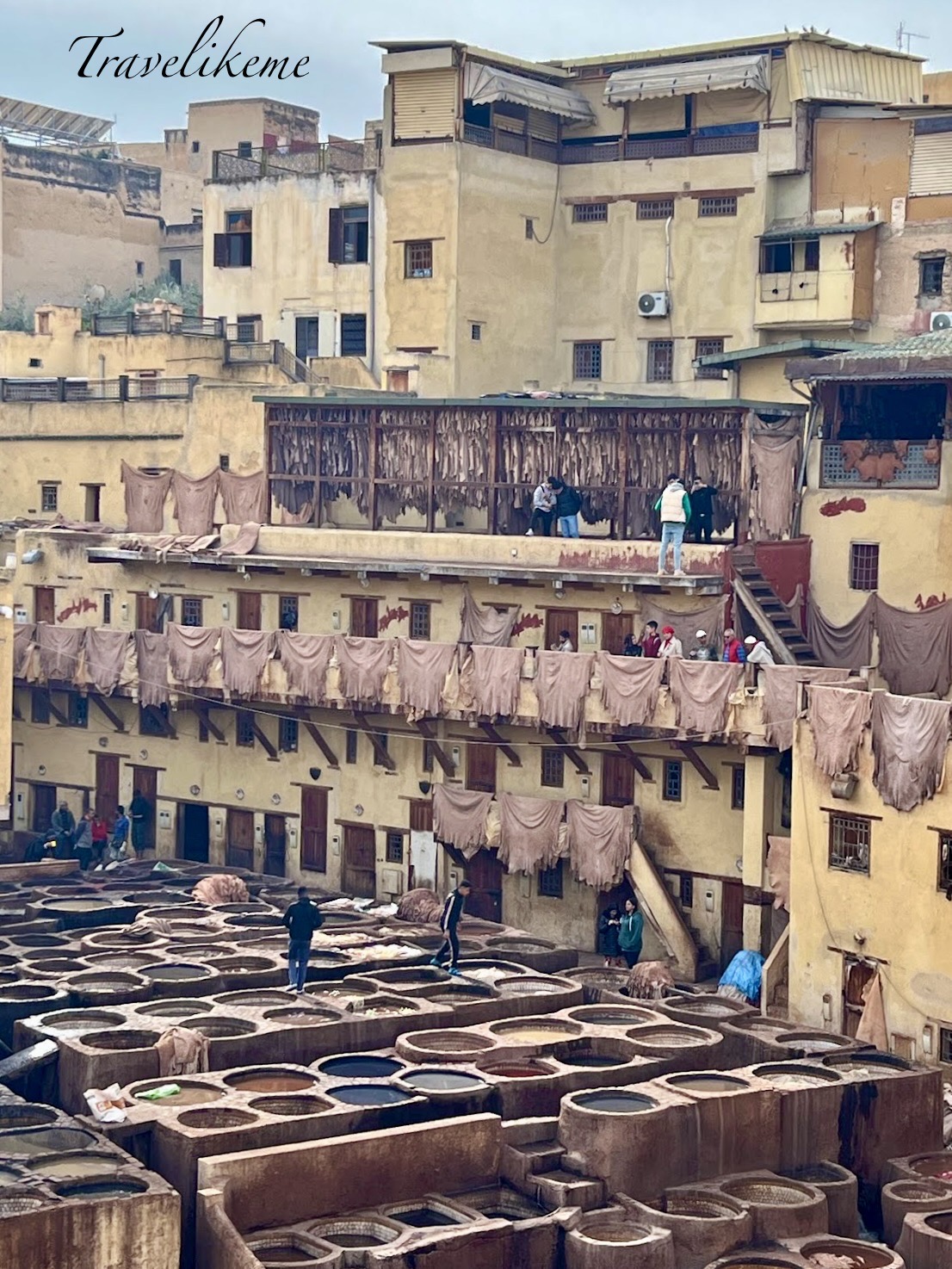
We were led to the rooftop of this leather shop, climbing about 4 stories after being shown around the showroom where there were literally hundreds if not thousands of leather goods of myriad forms to entice you.
Chouara Tannery is one of the three tanneries in the city of Fes, Morocco. It is the largest and oldest located in Fes el Bali, the Medina quarter of the city near the Saffarin Madrasa along the Oued Fes, also known as Oued Bou Khrareb.
It is believed that the Chouara Tannery dated from the City’s foundation under Idris II at the beginning of the 9th century. Though modern historians have not firmly established this fact, the tanneries have all been located near the main river or where water resources were available just as they are today.
The tanning industry since its beginning has been operating in the same manner as it did centuries before and today the tanning business is the main tourist attraction in the city of Fes. This is one of the world’s oldest tannery.
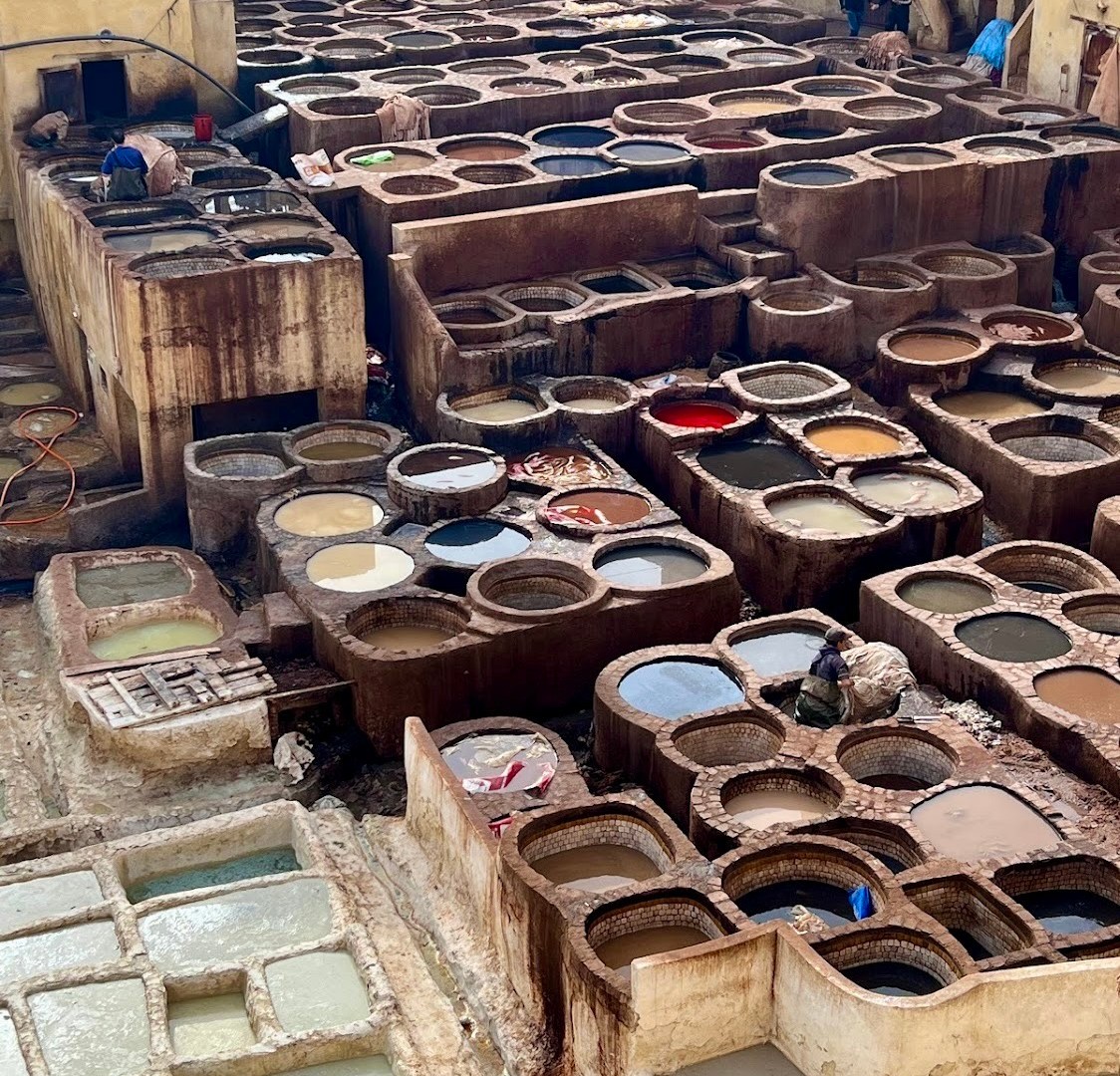
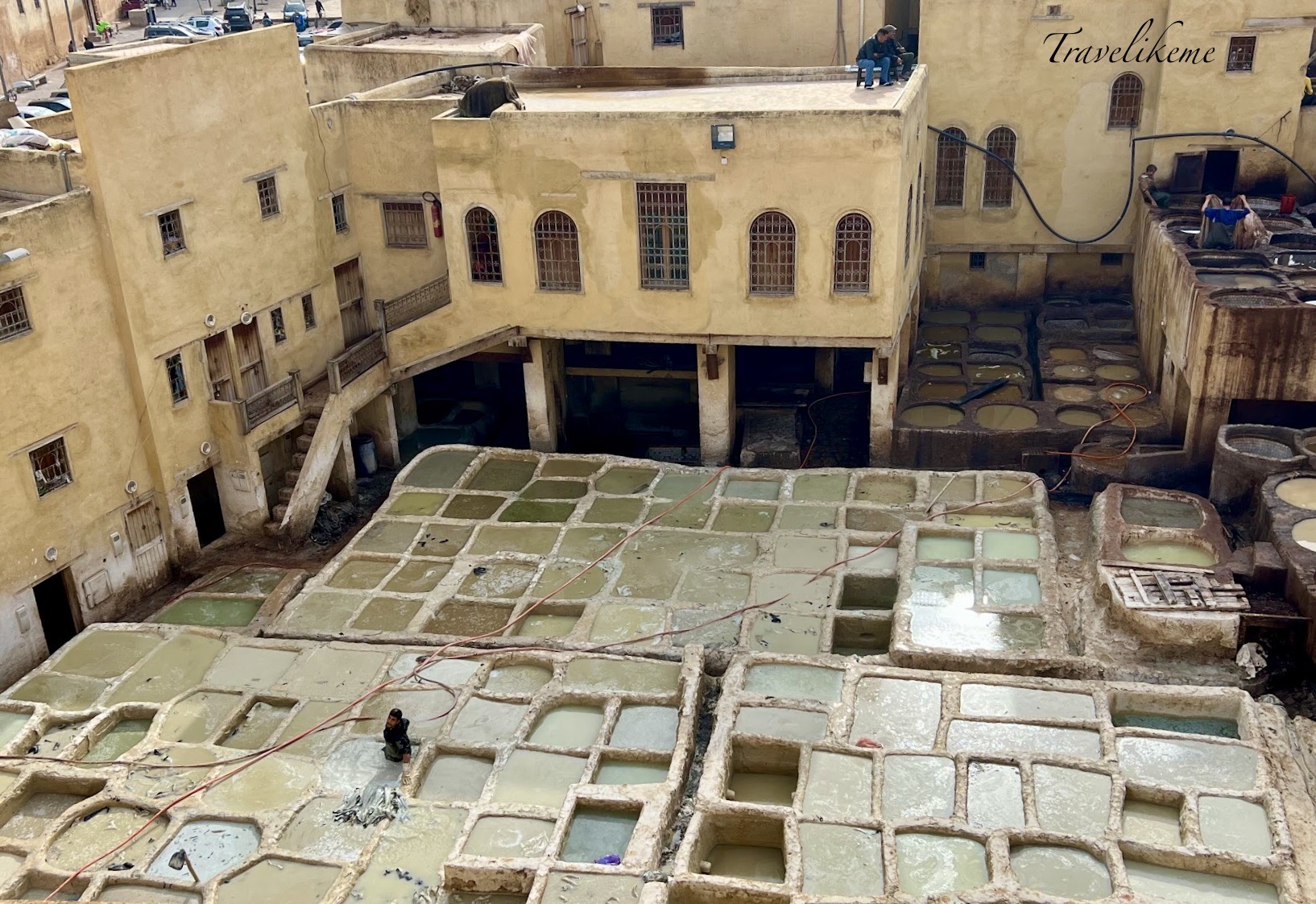
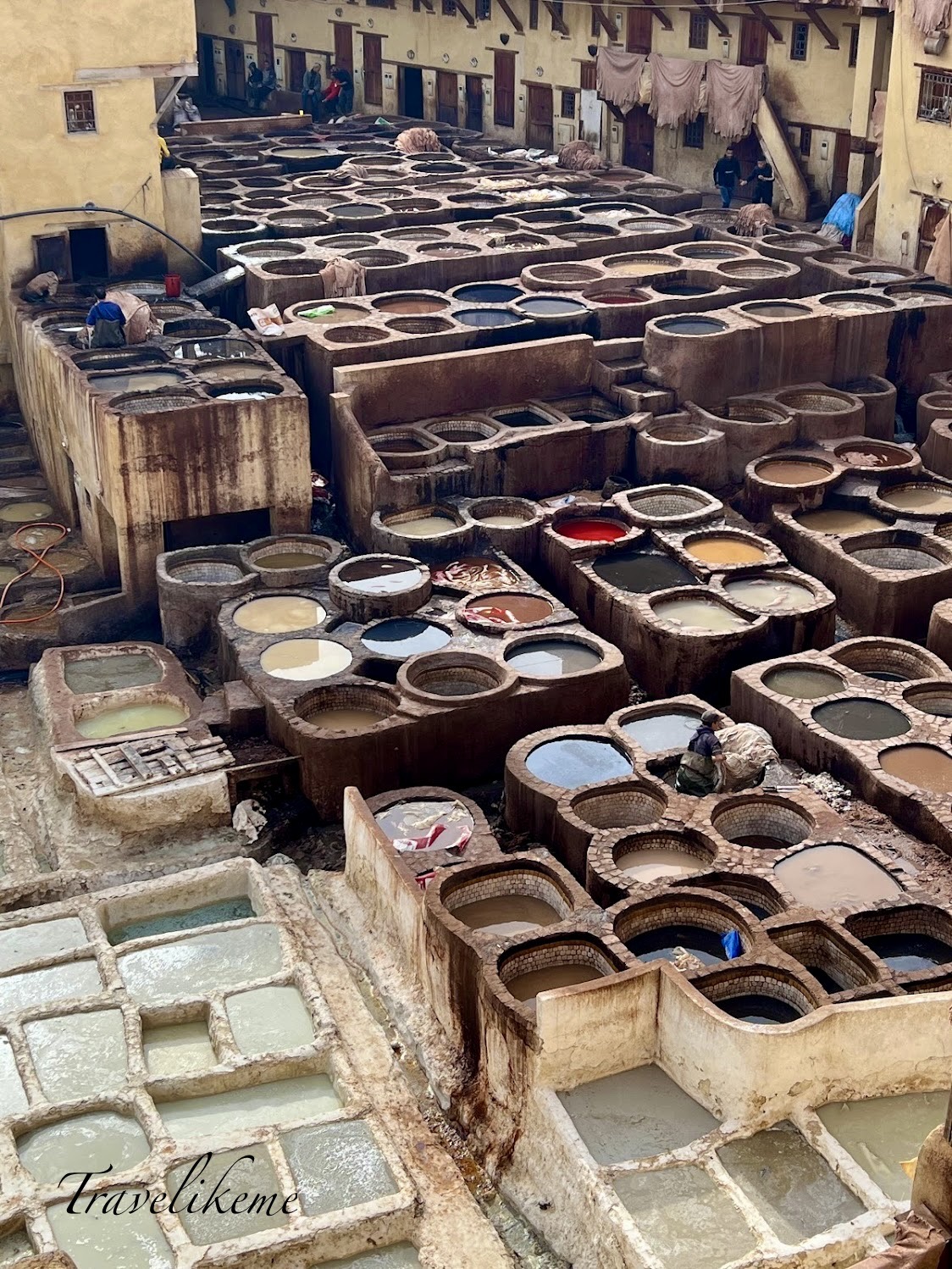
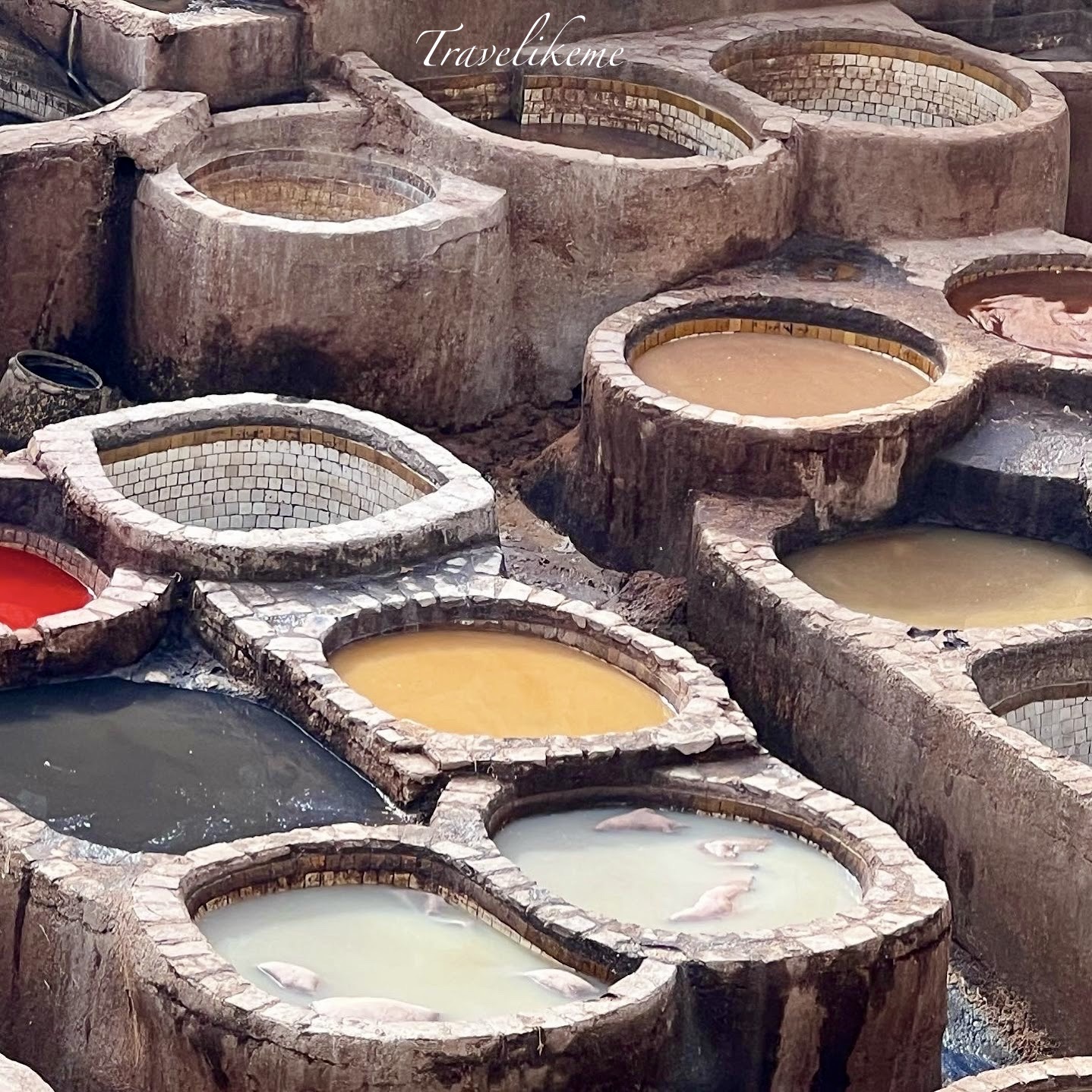
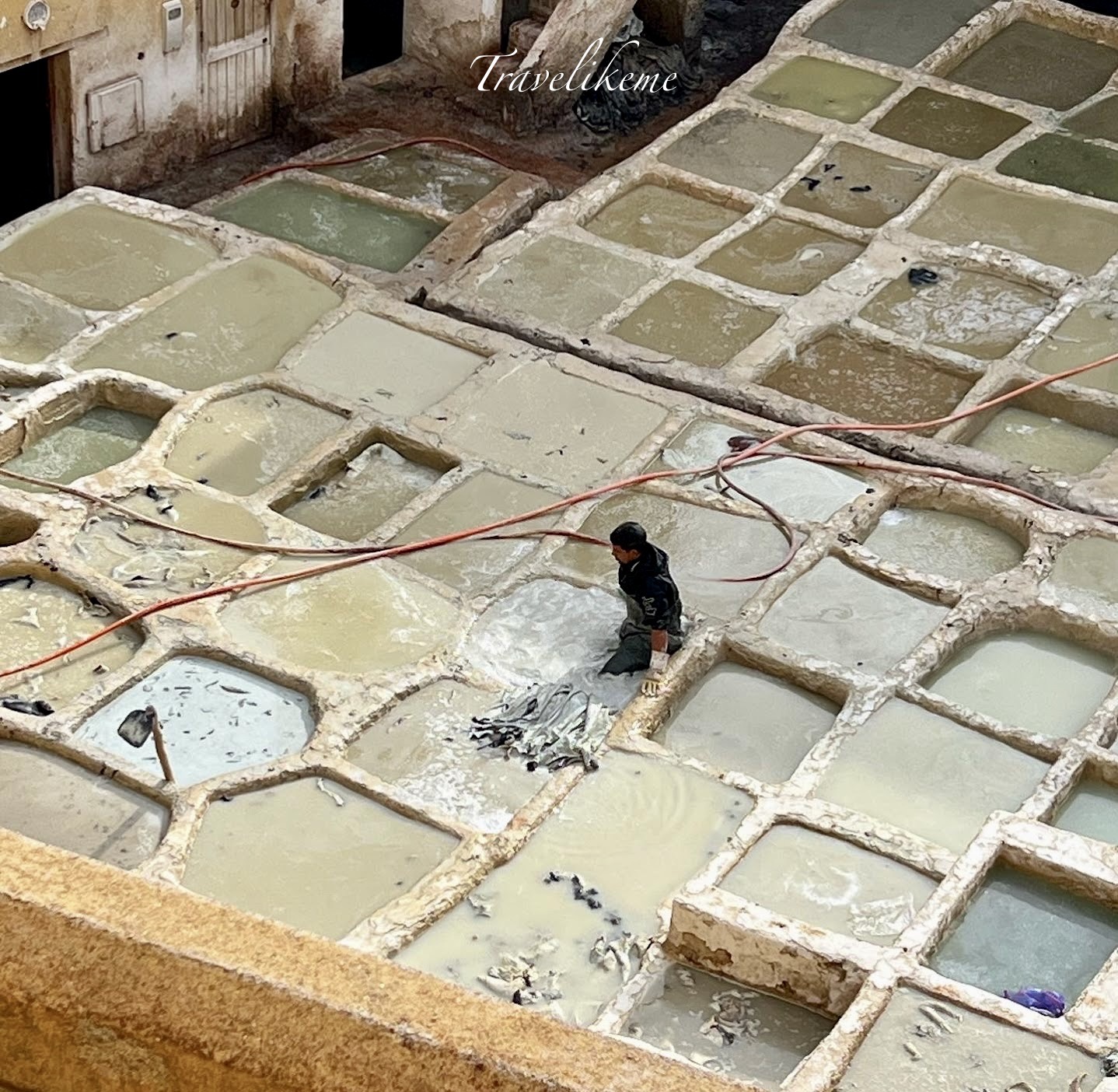
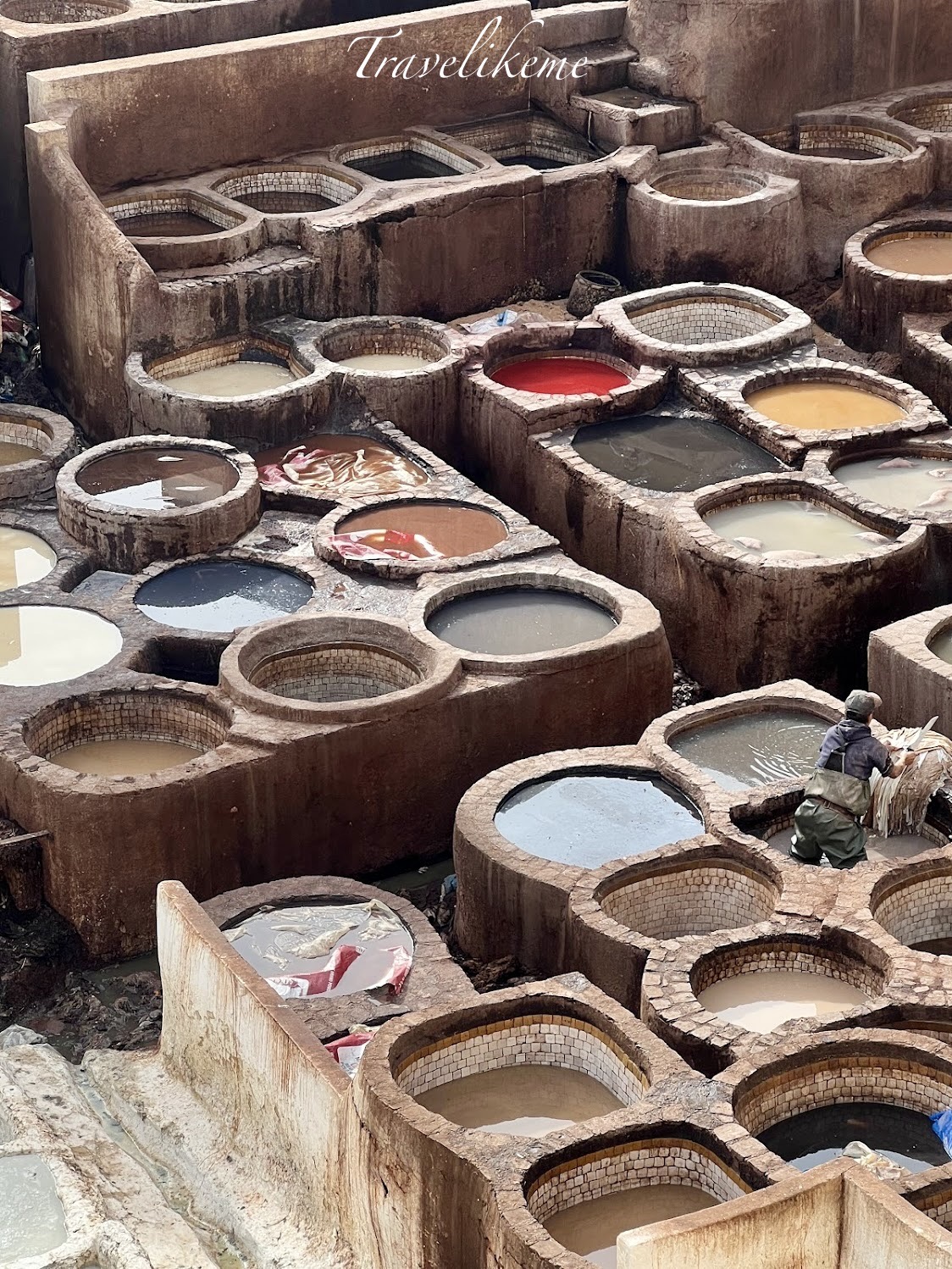
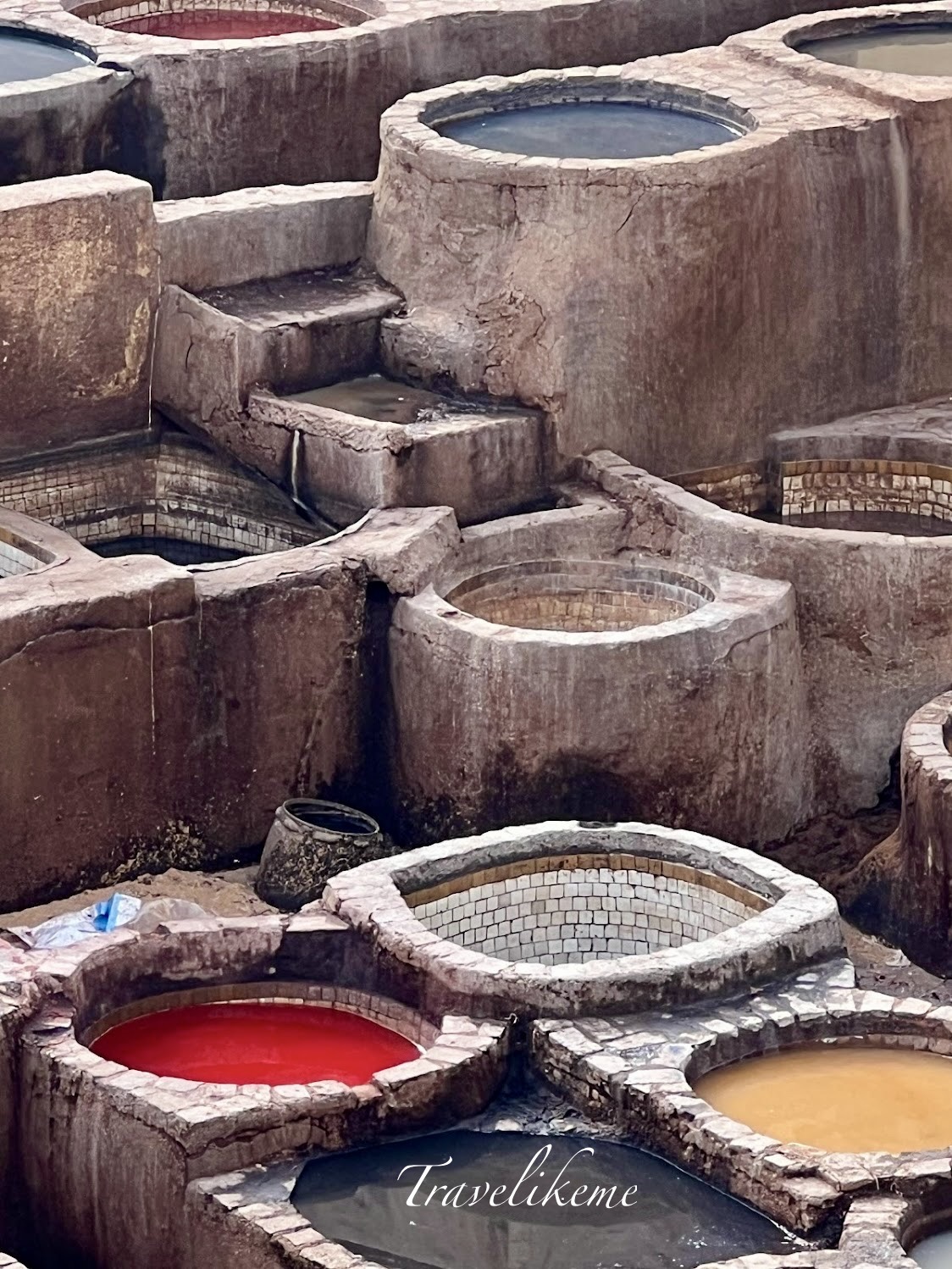
This section of the stone vats are filled with a whitish liquid which comprises of various mixtures of cow urine, quicklime, pigeon poop, salt and water. The soaking of the hides from cows, sheep, goats and camels are first processed by soaking them for 2-3 days in order to clean and soften the tough skins.
When the hides are ready to absorb the dyes, they are then soaked in the dyeing solutions which uses natural colorants such as poppy for red, indigo for blue and henna for orange.
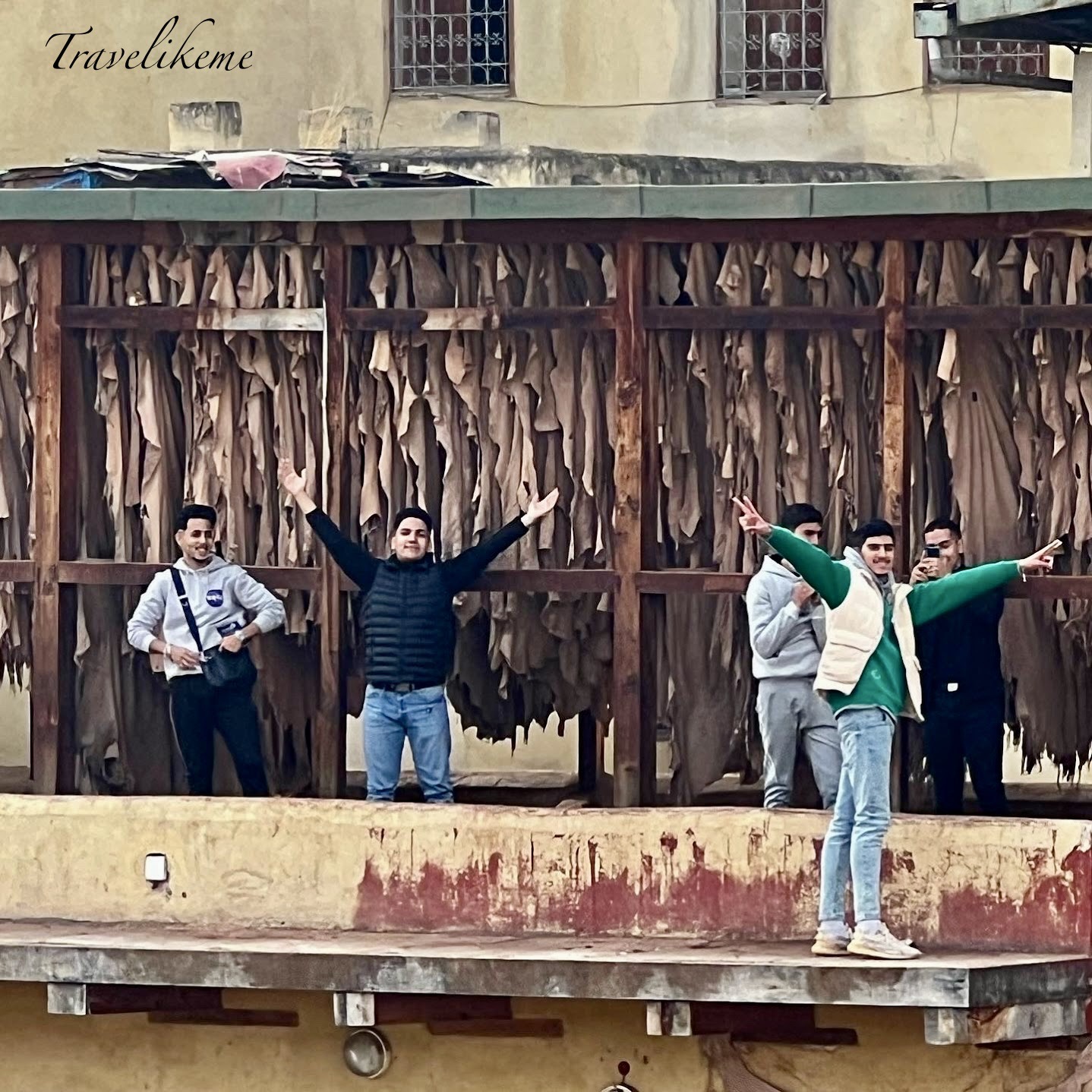
After dyeing, the hide is dried under the sun and the resulting leather, sold to craftsmen.
Tanneries have always been treated as polluting areas due to the waste runoff and the strong smells that they create. Since the 19th century, tanneries have made extensive use of Chromium to aid the tanning process. Certain types of Chromium are toxic and there have been concerns of resulting pollution and contamination of the soil and Fes River downstream from them. Tannery workers and locals have long complained about the adverse health effects they suffered living in close proximity in the area.
The entire leather production process consists of manual labour and does not involve any modern machinery. This methodology has remained unchanged since the medieval times.
Morocco’s famed leather goods, include bags, coats, shoes and slippers prized for their high quality.


 travelikeme