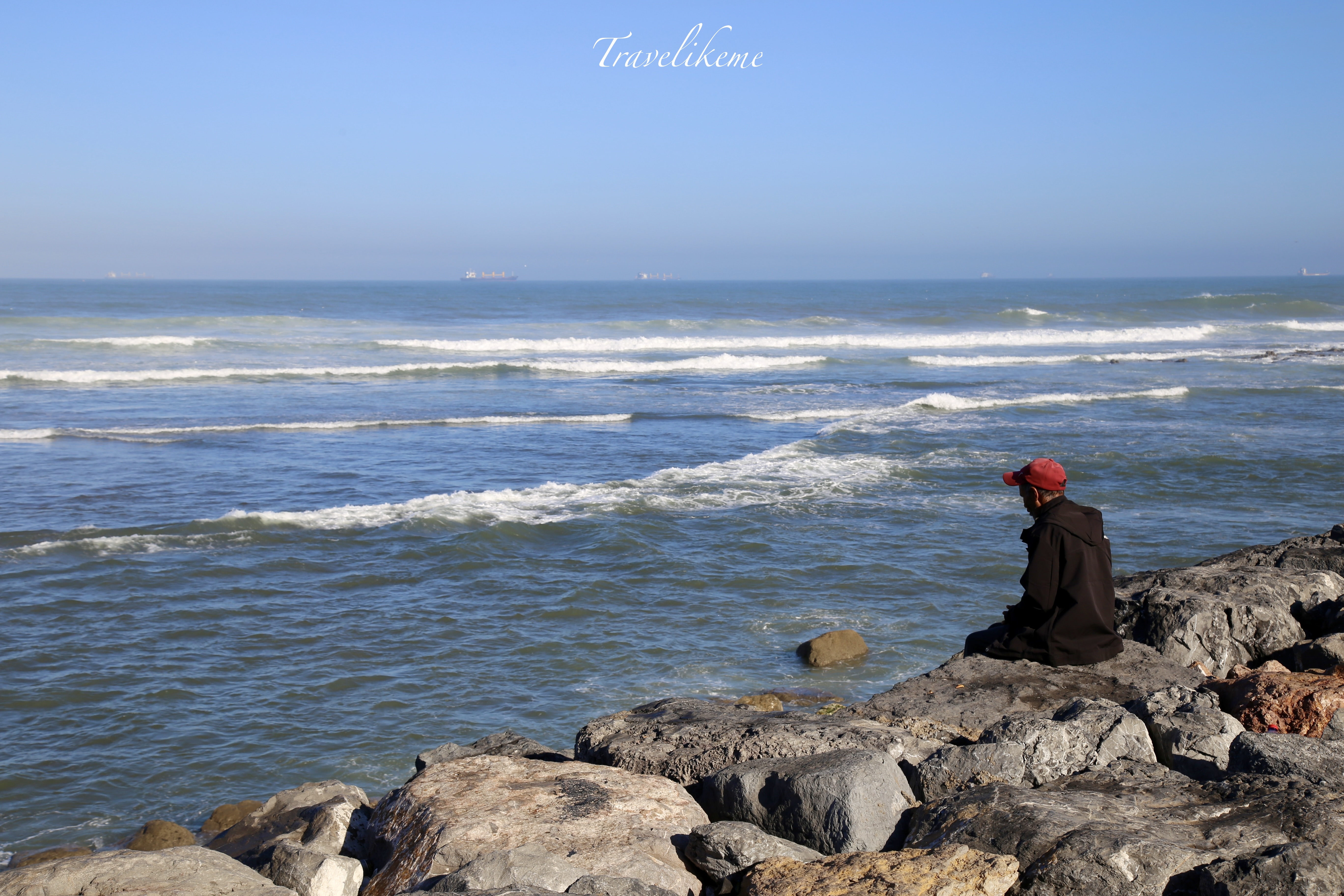
An angler sits patiently in anticipation of a bite on his baited line as he gaze is fixed on the crashing waves that endlessly crashed into the rocky shoreline. The Atlantic Ocean stretches for hundreds of km on the eastern side of Morocco and the sunsets are really quite a site to behold.
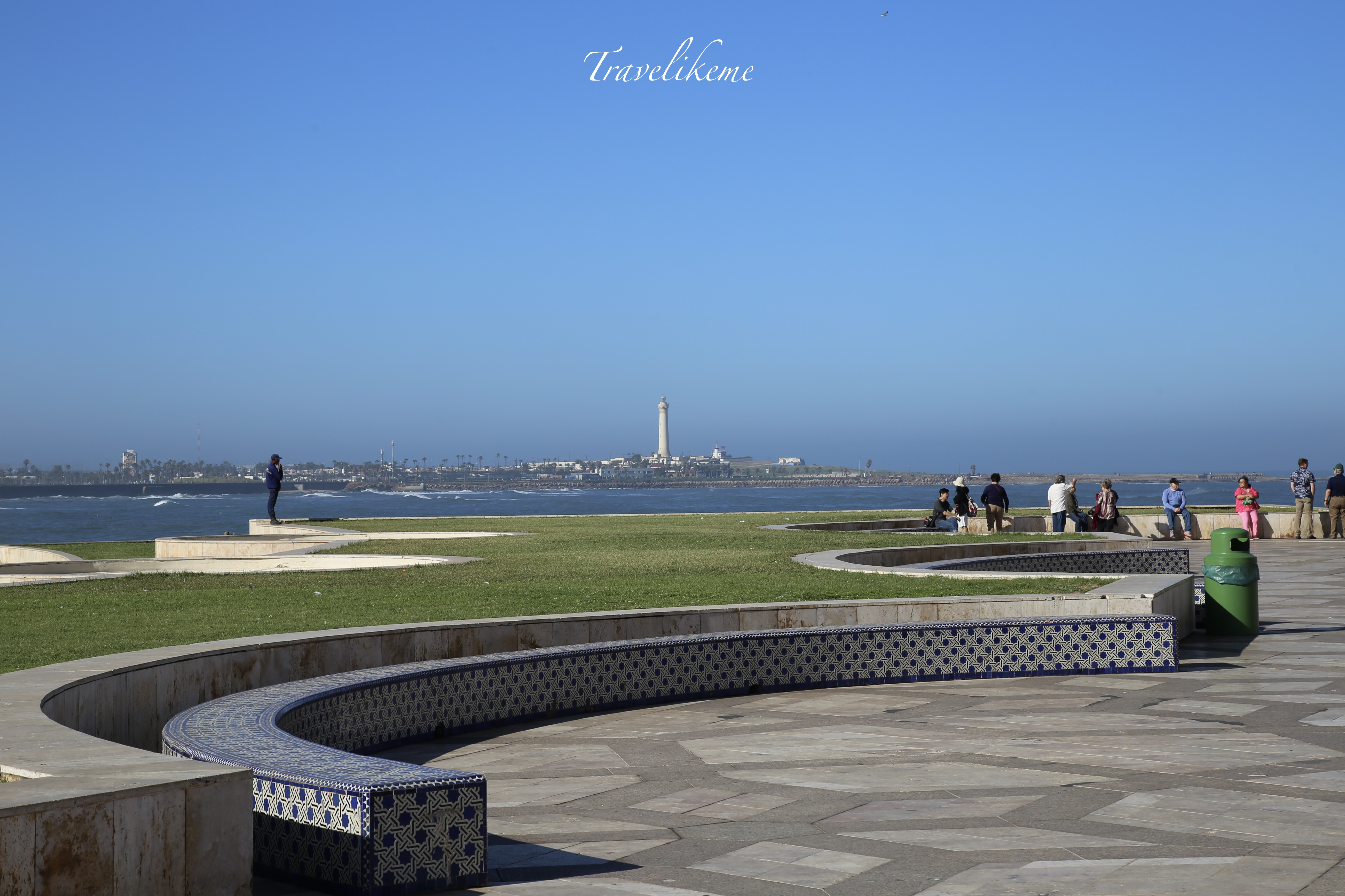
I walked along the promenade facing the Atlantic Ocean just to enjoy the sea breeze in my face before heading towards the Hassan II Mosque in Casablanca.
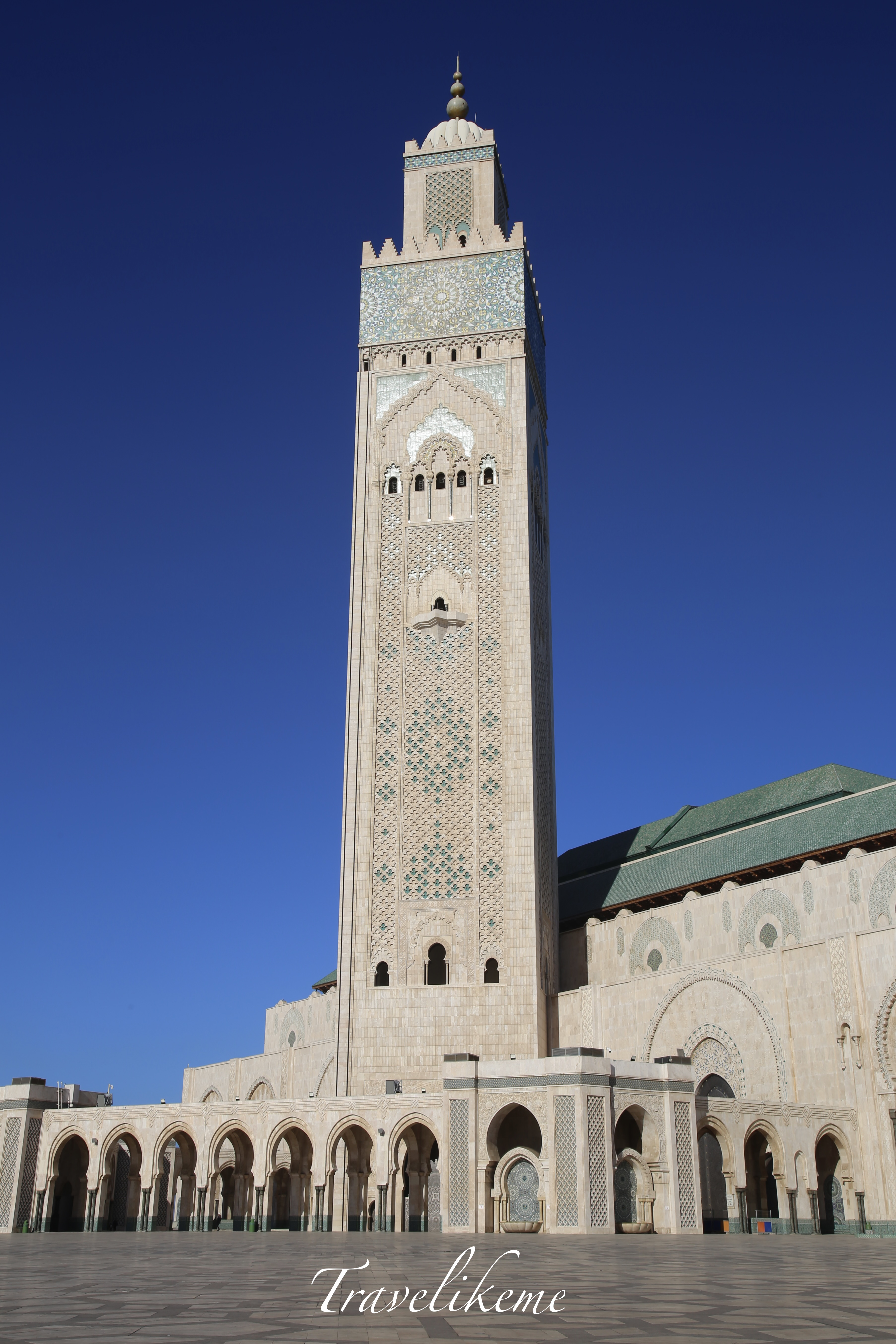
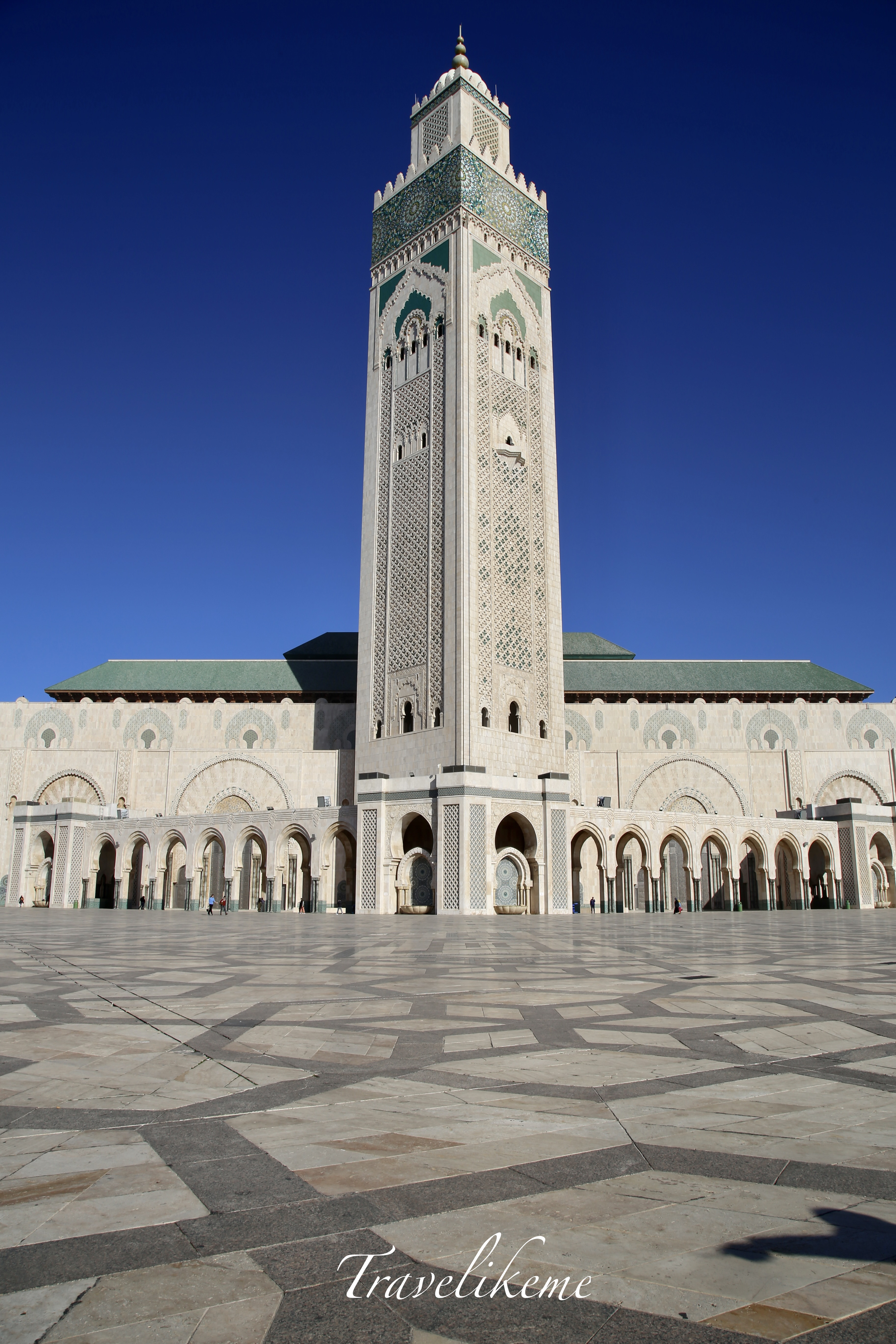
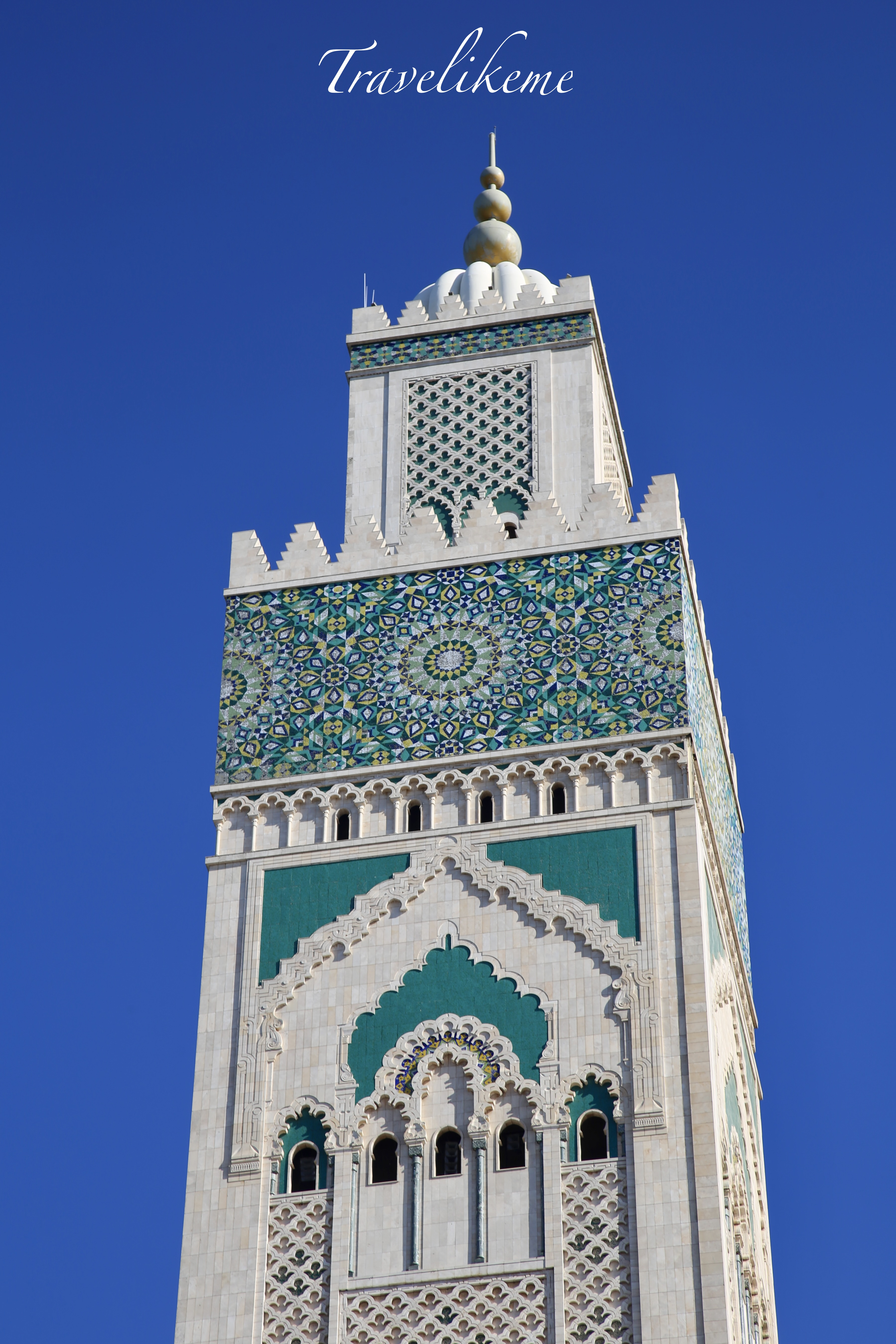
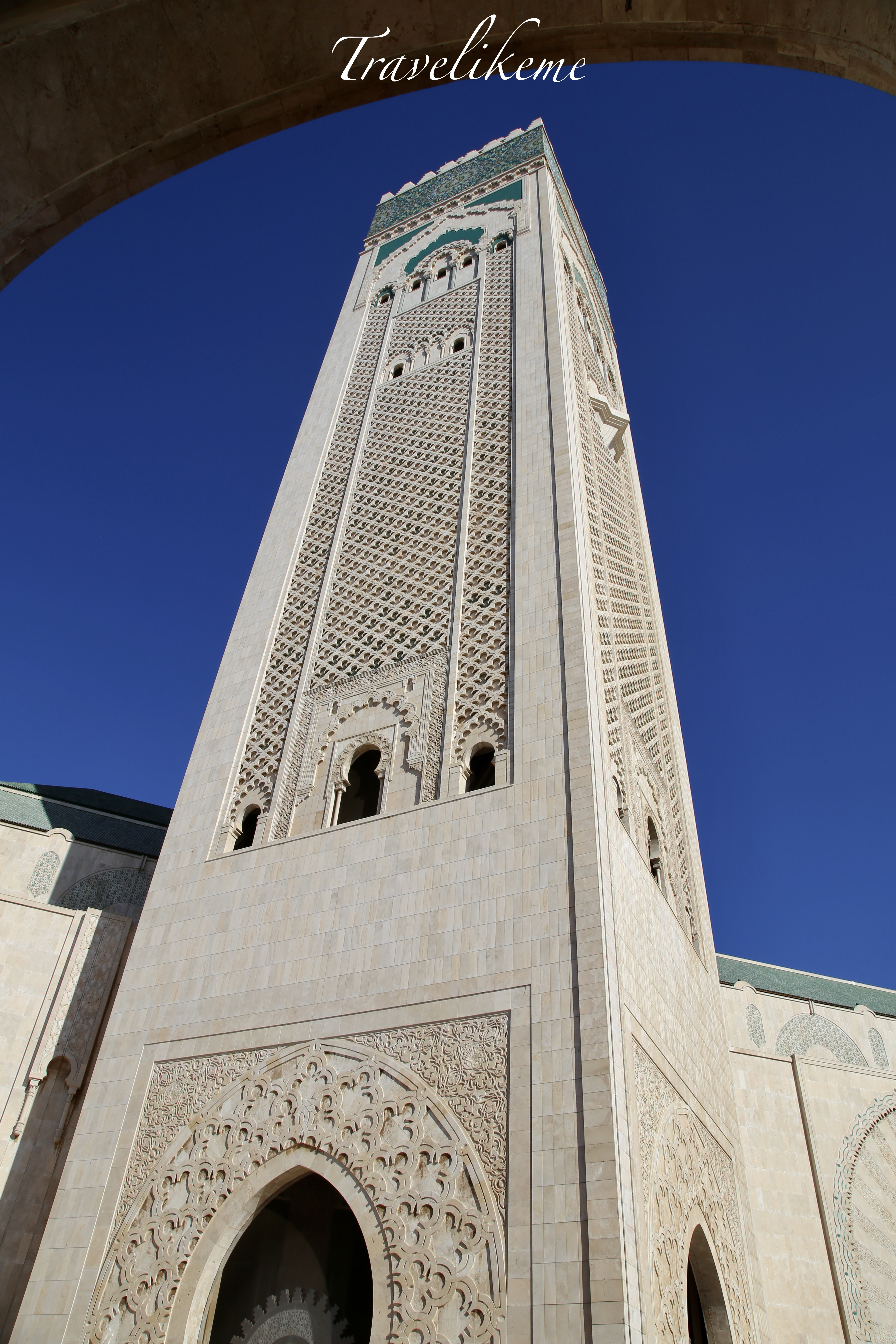
Here I am, standing before the world’s second tallest minaret which is 210m or about 60 stories high completed on 1993. You would really have to crane your neck to take in this look at this minaret thoroughly.
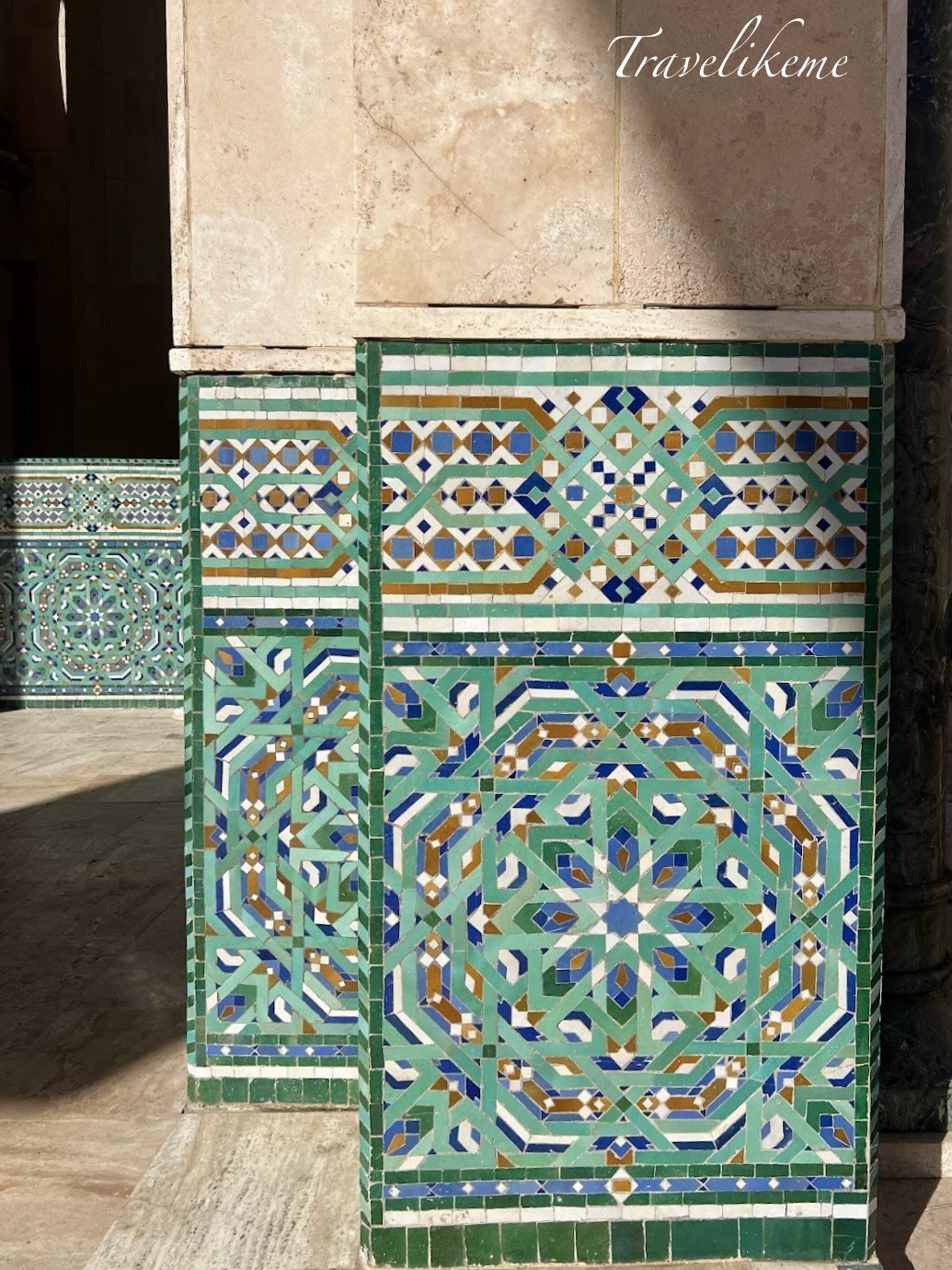
Hassan II Mosque Museum opened its doors to the public after the construction of the mosque. It showcases art pieces from various Moroccan arts as well as unused architectural elements of the mosque such as stucco, painted wooden ceilings and Zellige tiled walls.
This rather daring and modern interpretation of a mosque bears many signs of innovation due to technical reasons as well as the fertile exploration in aesthetics and it juxtaposes with Moroccan ancestral arts in a harmonious way.
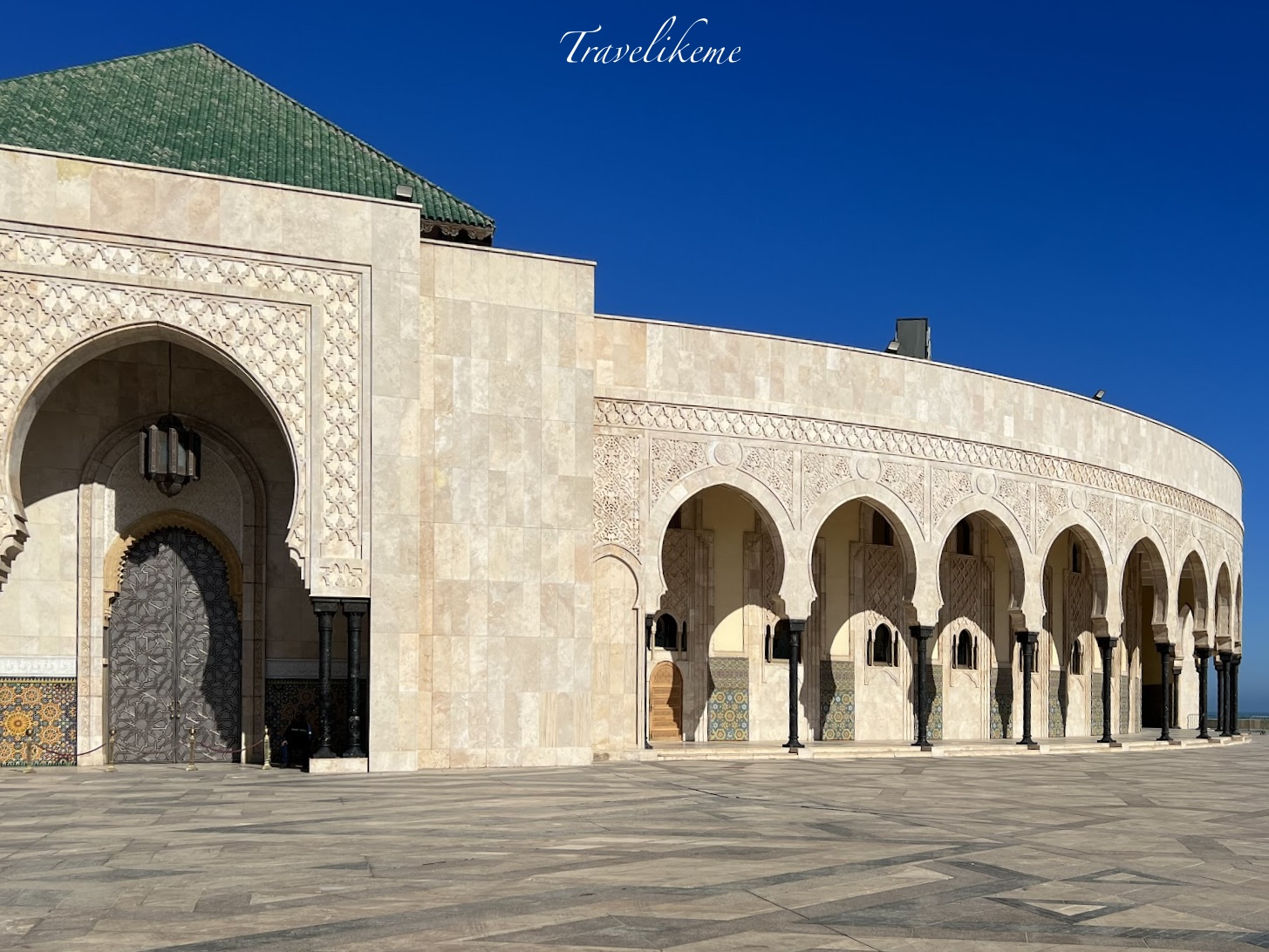
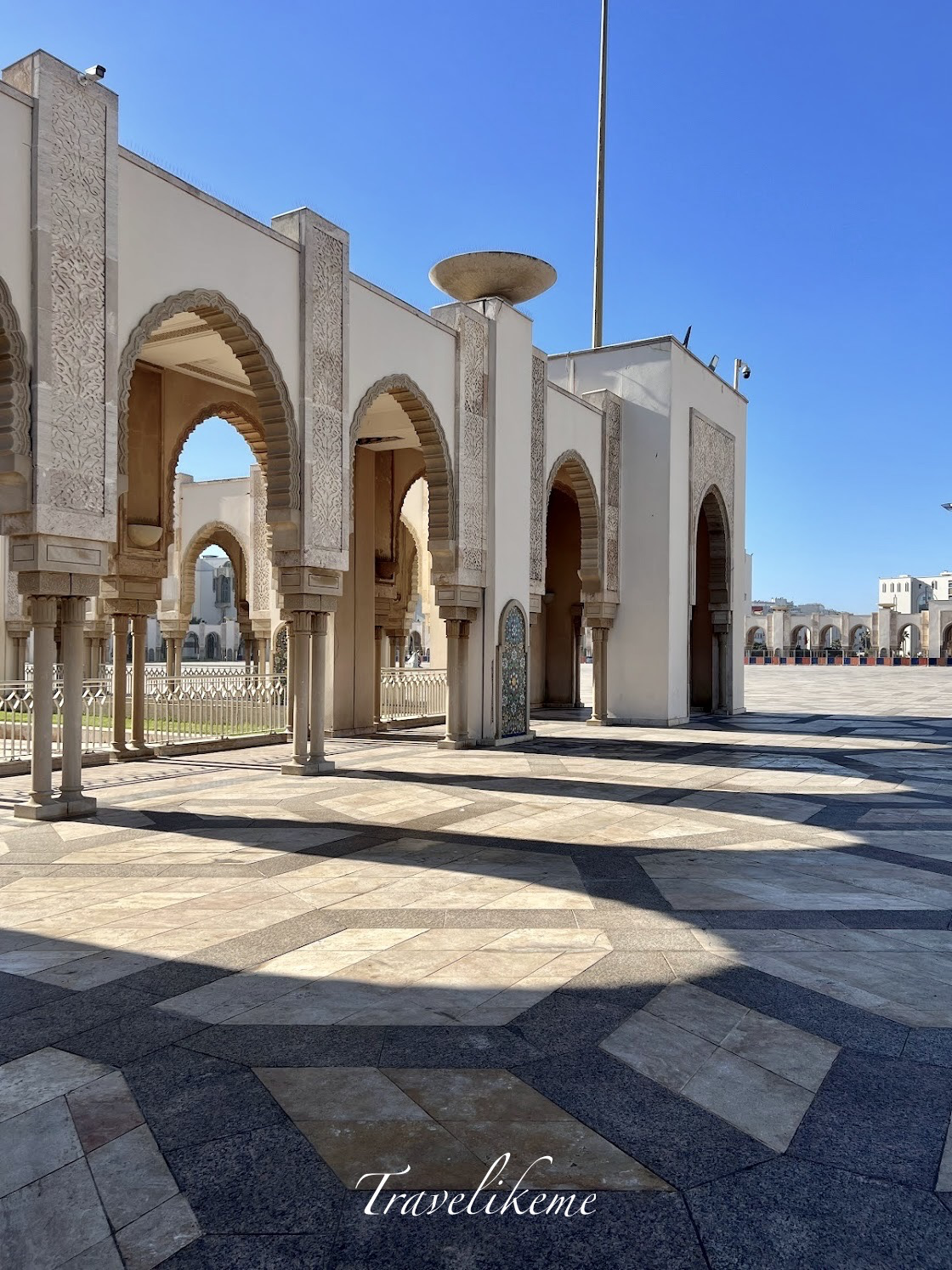
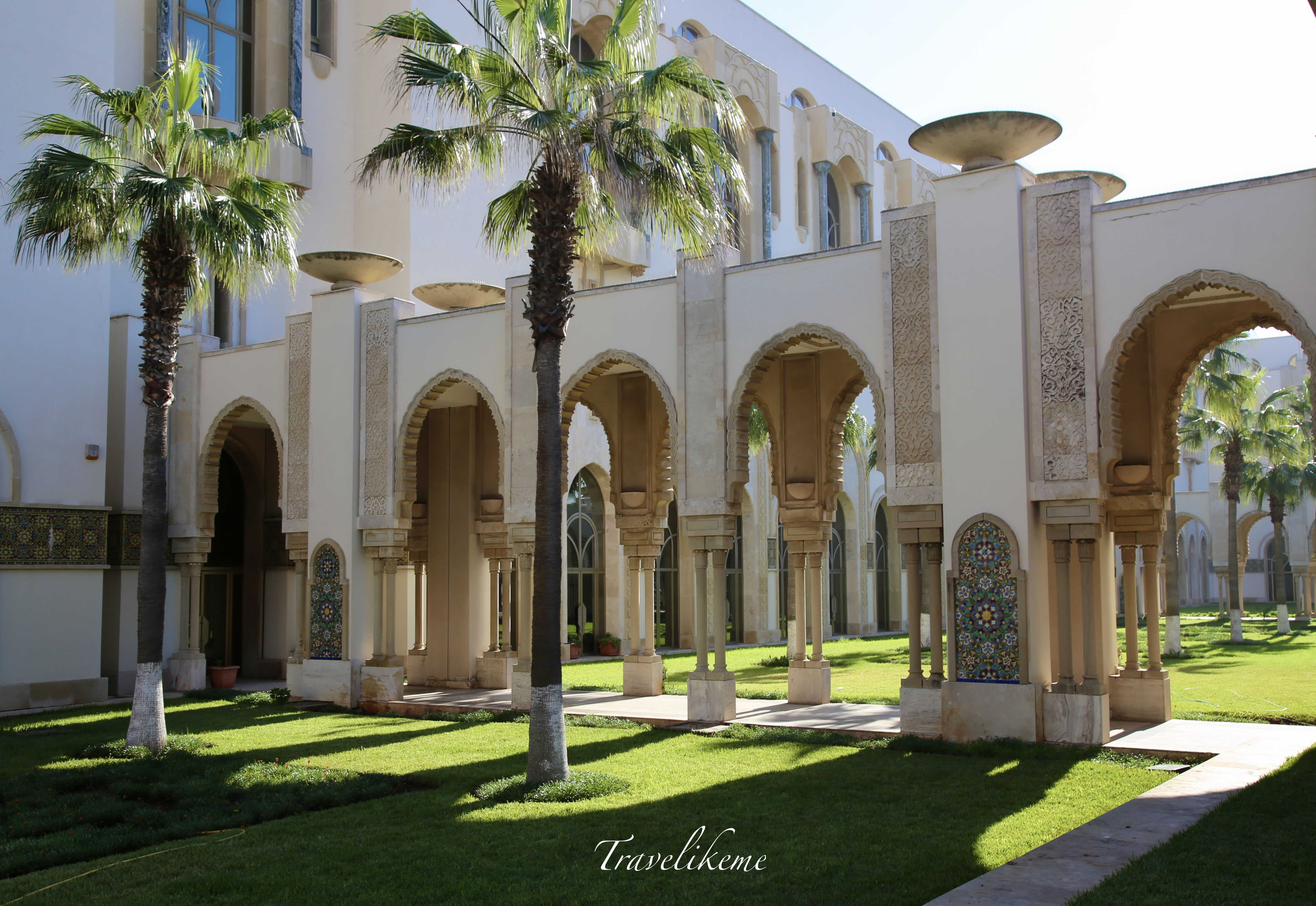
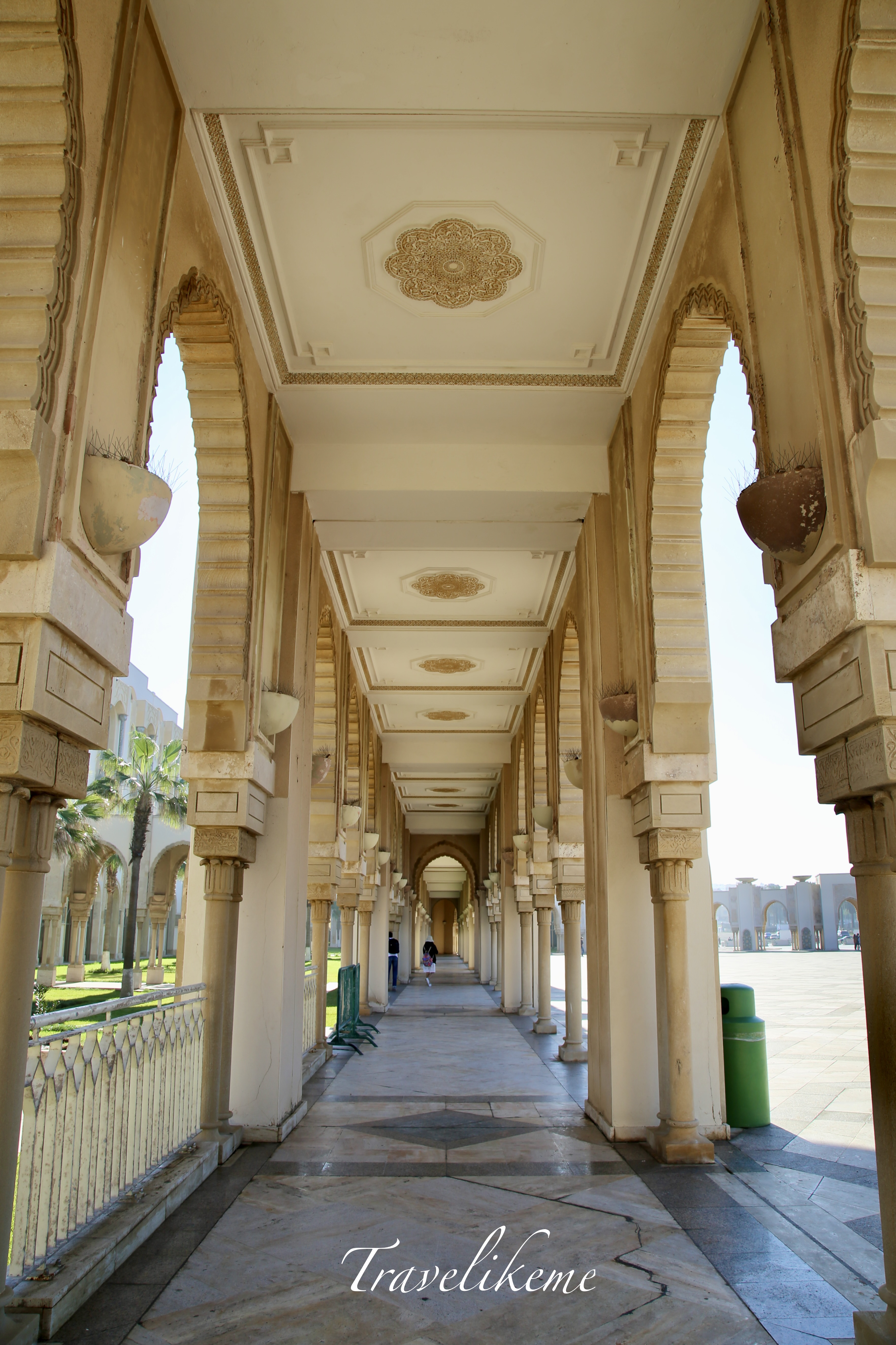
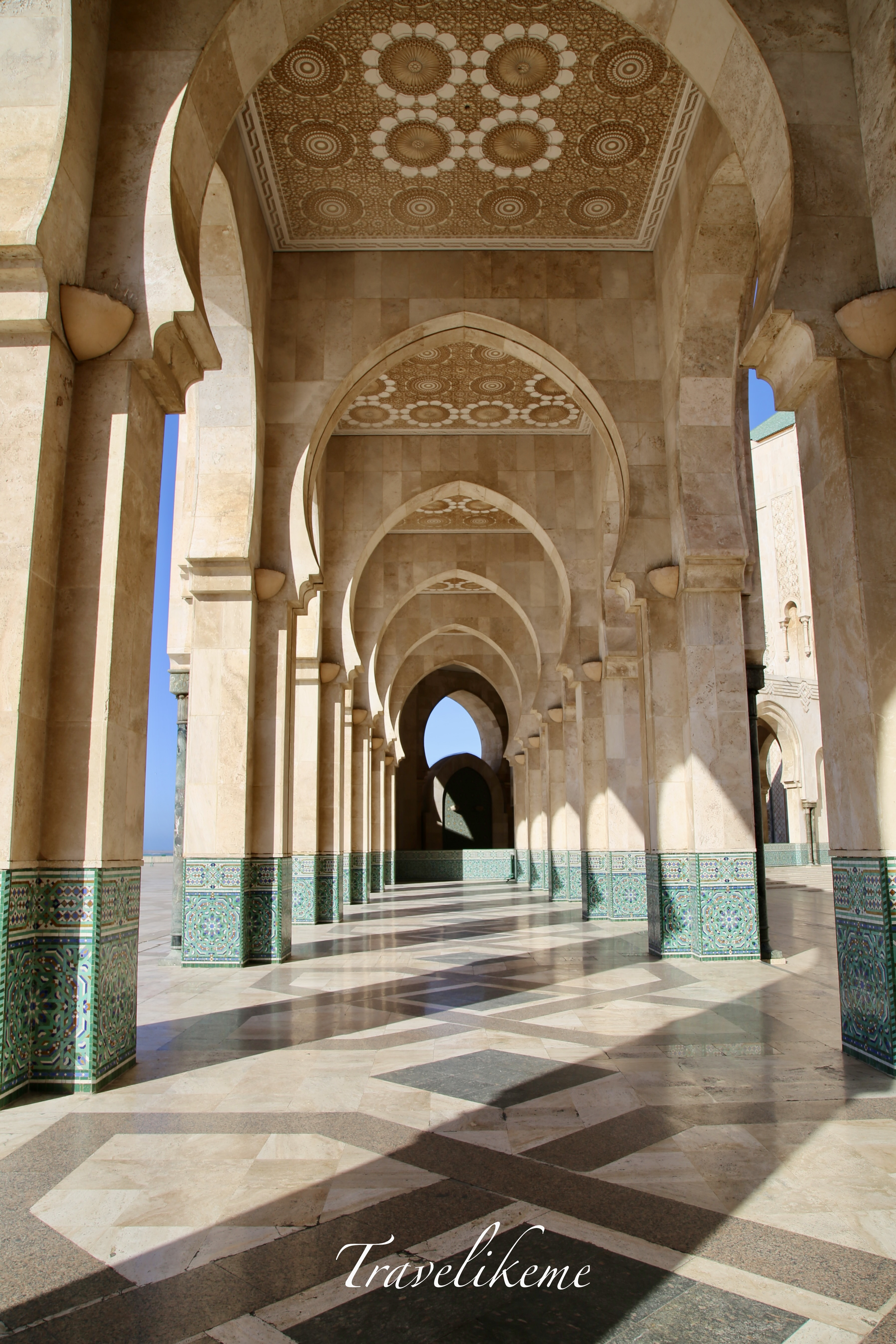
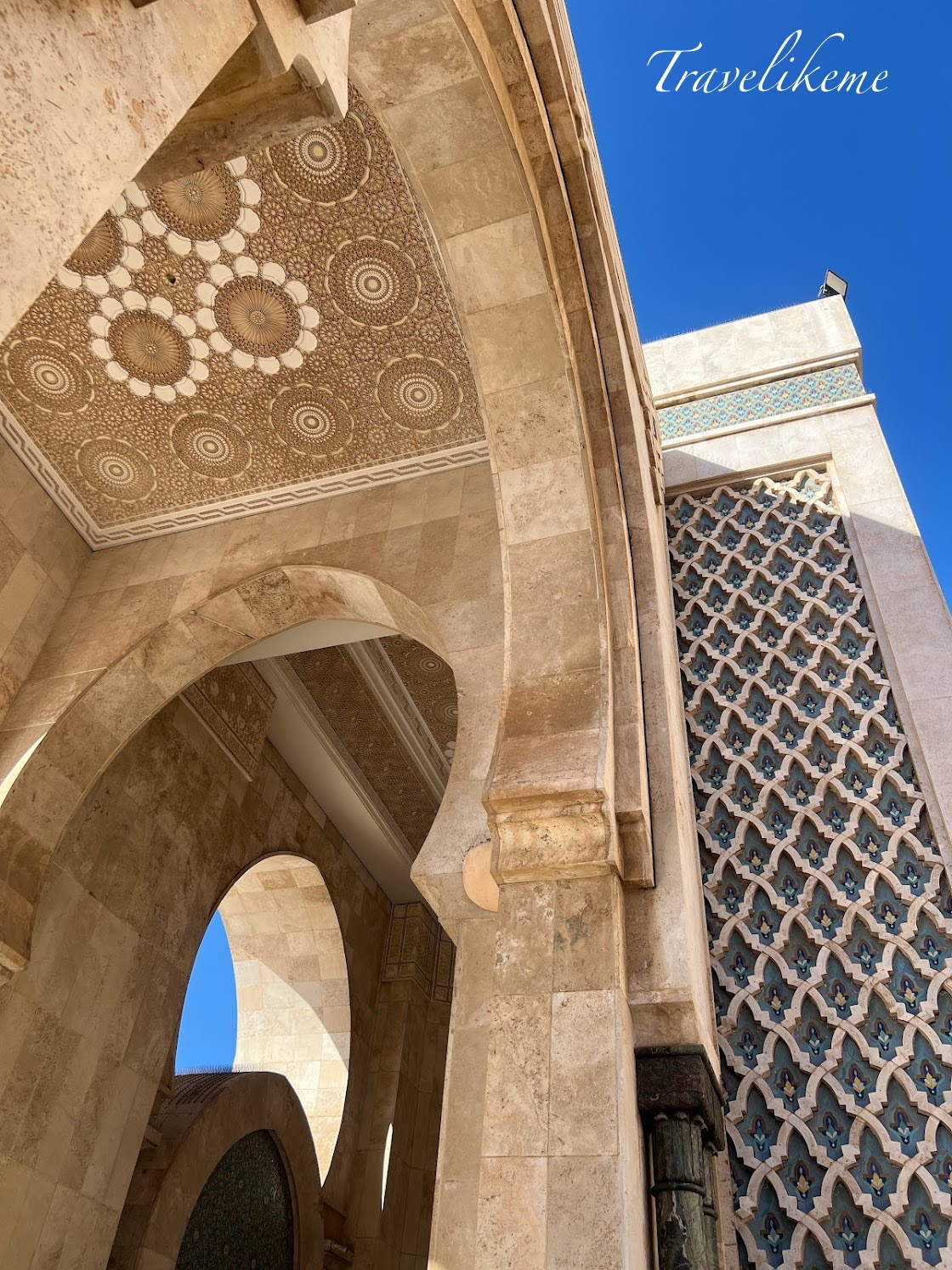
The entire building site and compound has a pleasant balance and welcoming ambience. Notable architectural features include the conspicuous columns, the horseshoe arches and innumerable muqarnas (three dimensional honeycomb-like vaulting in Islamic architecture) that embellish the ceilings especially in the prayer hall.
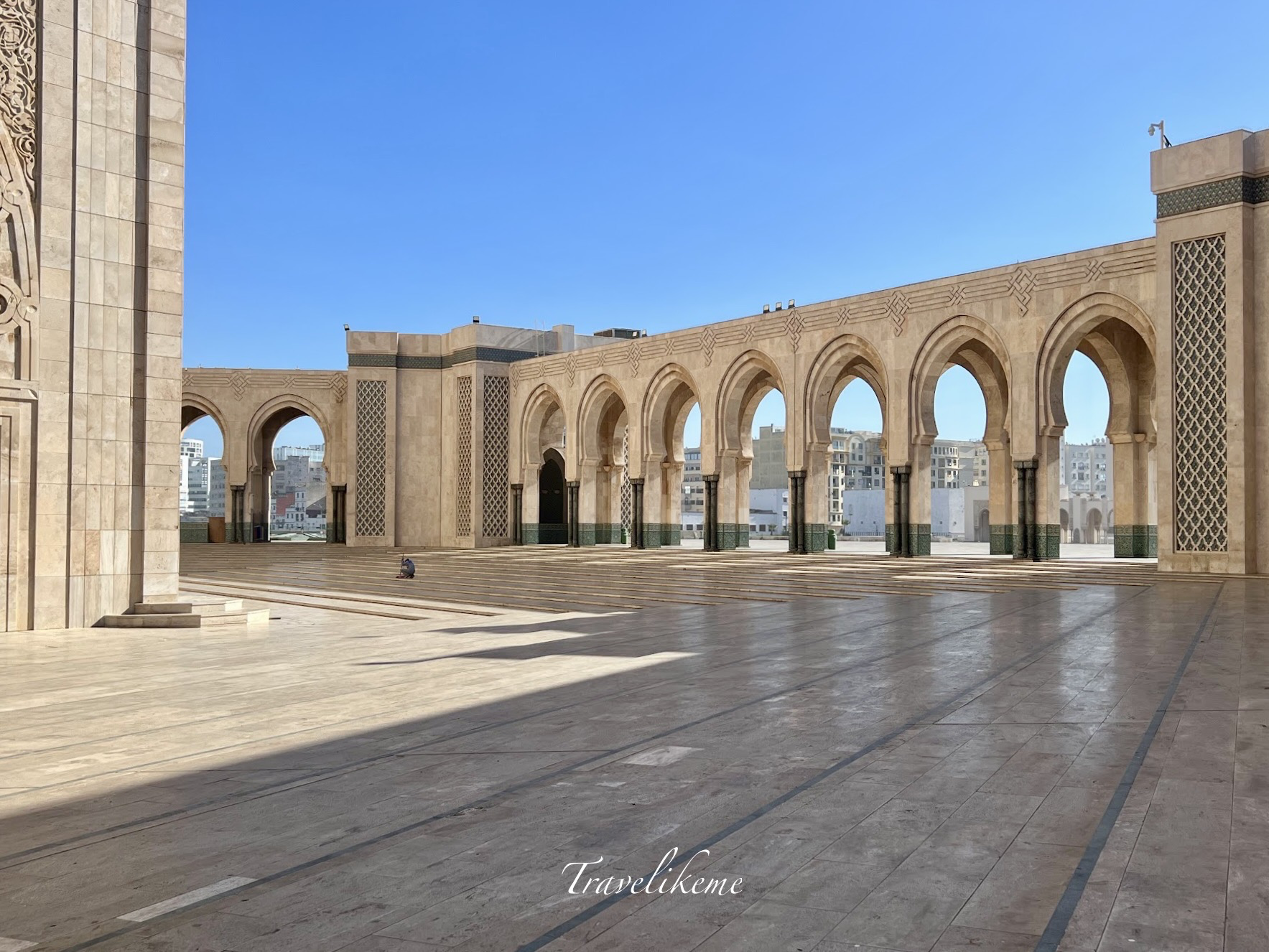
The symmetrical columns and horseshoe arches extend down this colonnade walkway that connects the Mosque complex to the Museum, the Madrasa, Conference Halls and a large library. The admission fee for Adult foreigners to the Mosque is 130MAD or 140MAD for a combo ticket to both the mosque and museum.
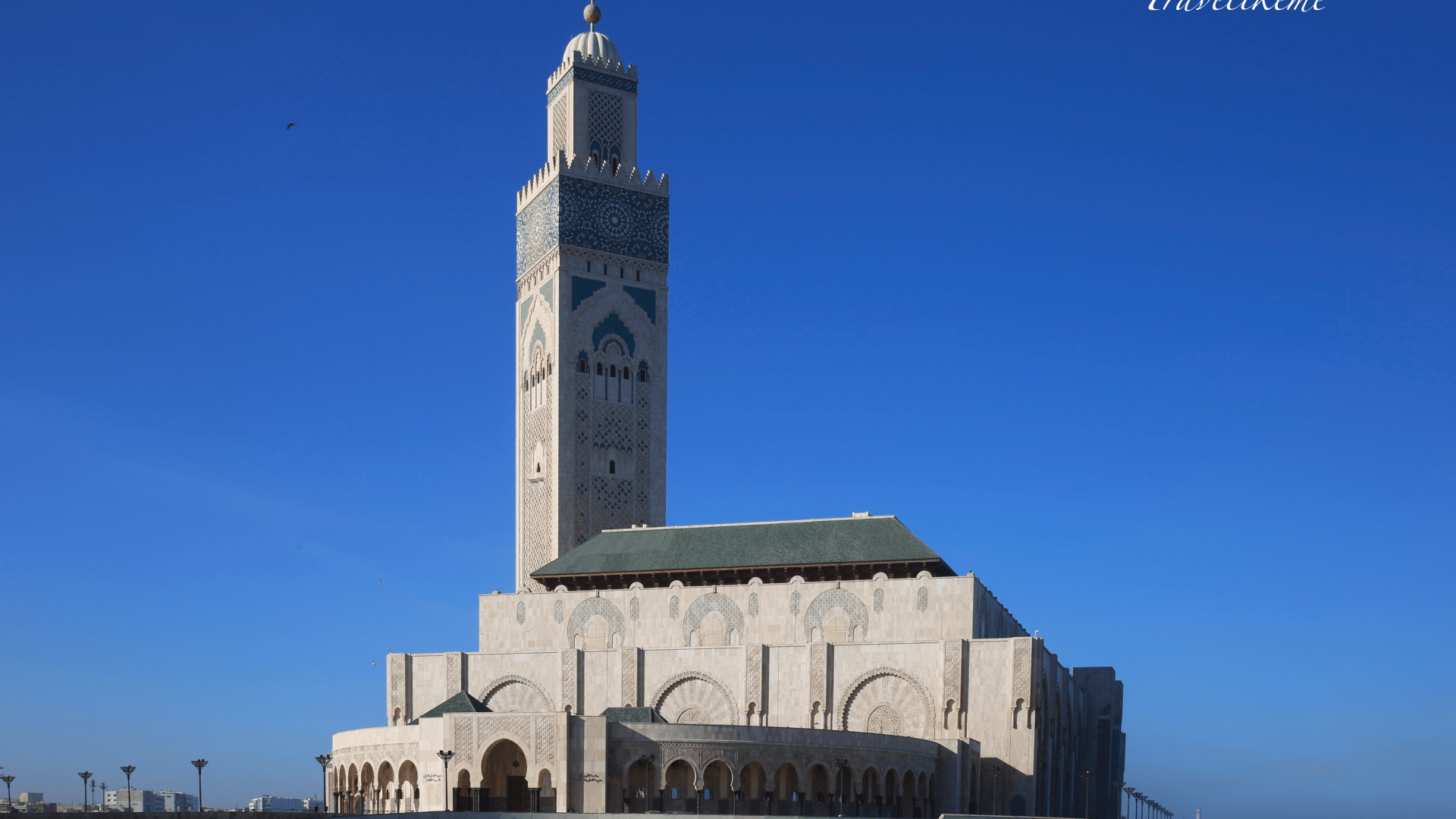
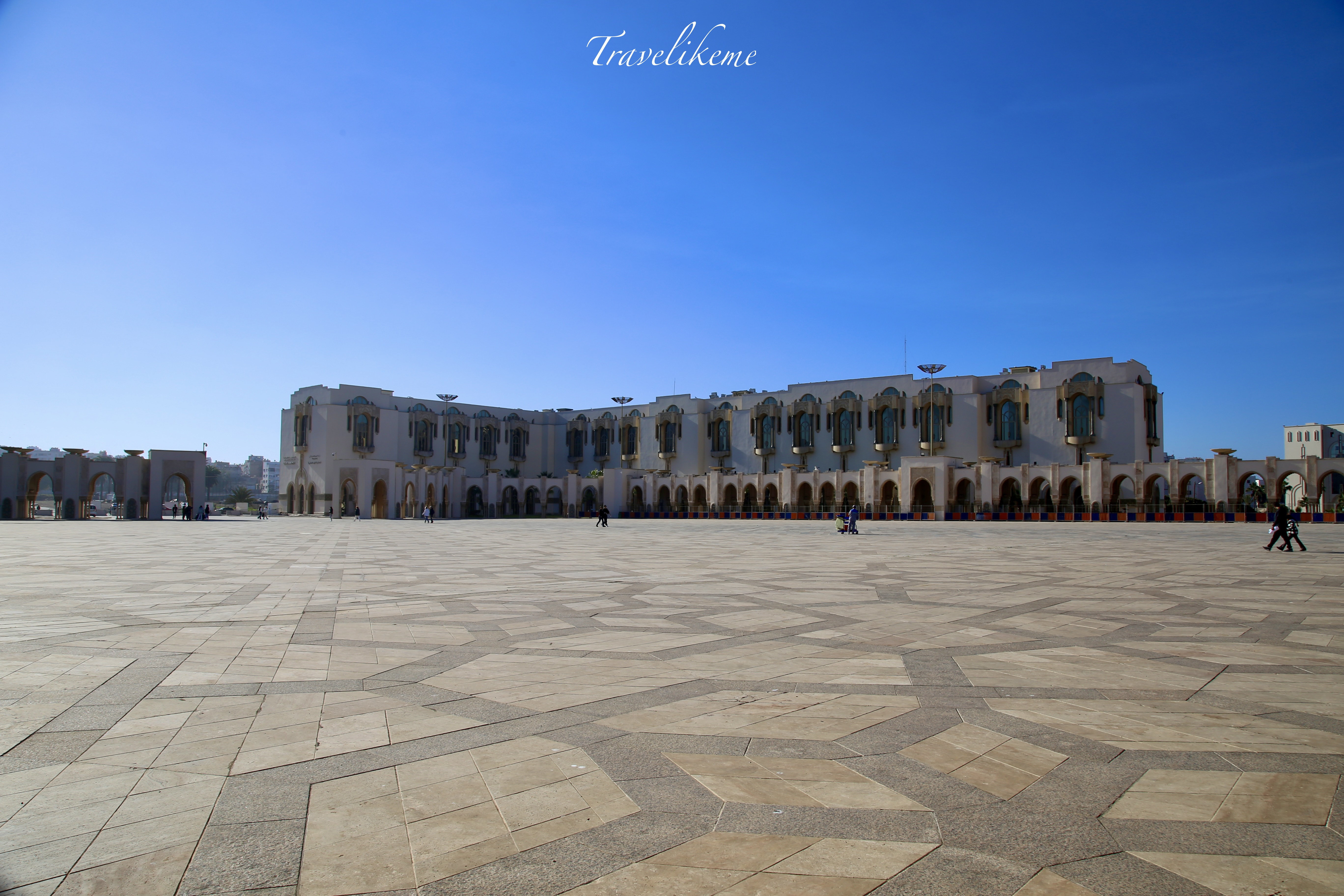
The immensity of the whole mosque and the adjoining complex is only fully appreciated when you stand at the adjacent promenade of Hassan II Mosque. The building dimensions are 200m in length and 100m in width with all the building materials extracted from around Morocco with the exception of some Italian white granite columns and 56 glass chandeliers from Murano, Italy. The upper roof is retractable in a matter of 5 mins and would allow the devotees to pray under the blue Moroccan sky.
Situated at Bd Sidi Mohammed Ben Abdallah in Casablanca, the mosque spans over 9 hectares and nestles between the harbour and the El Hank Lighthouse, seen in the distance. The well tended gardens in the mosque compound is a popular place for family picnics.
A laser beam is fitted at the top of the tower which is orientated towards Mecca with a 30km range and you can see it distinctly from a distance in the evening. Green tiles decorate the minaret for a third of the height from the top and the colour changes to a turquoise blue. The minaret is built with reinforced concrete that can withstand drastic weather conditions and seismicity.
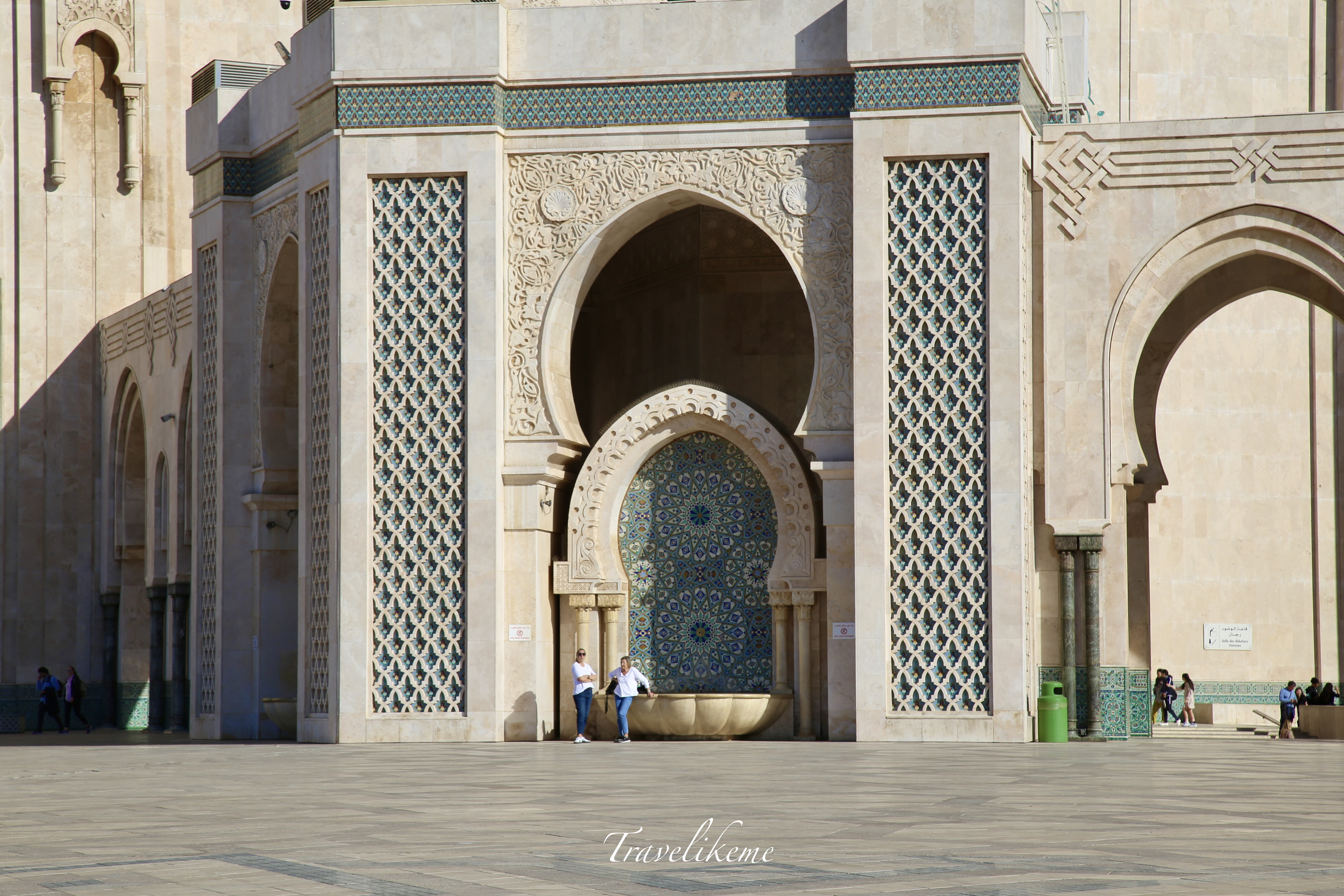
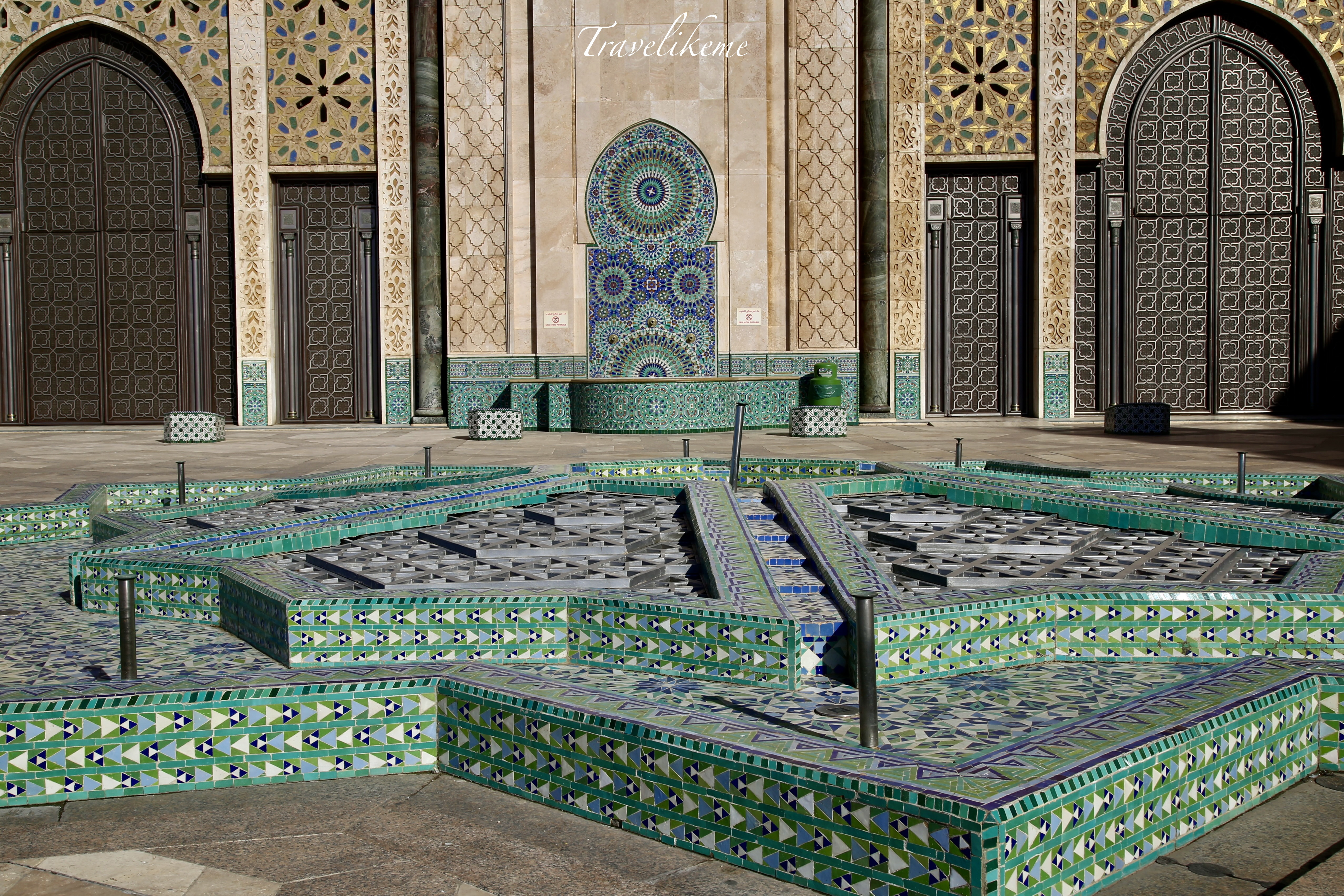
The Ablution Fountain and Hammans are in the basement and have a separate entrance. Wudu is a partial purification ritual that Muslims have to perform before reading the Quran. The process includes washing the hands, rinsing the mouth and nose, then the forearms, wiping the head, ears then washing or wiping the feet sequentially.
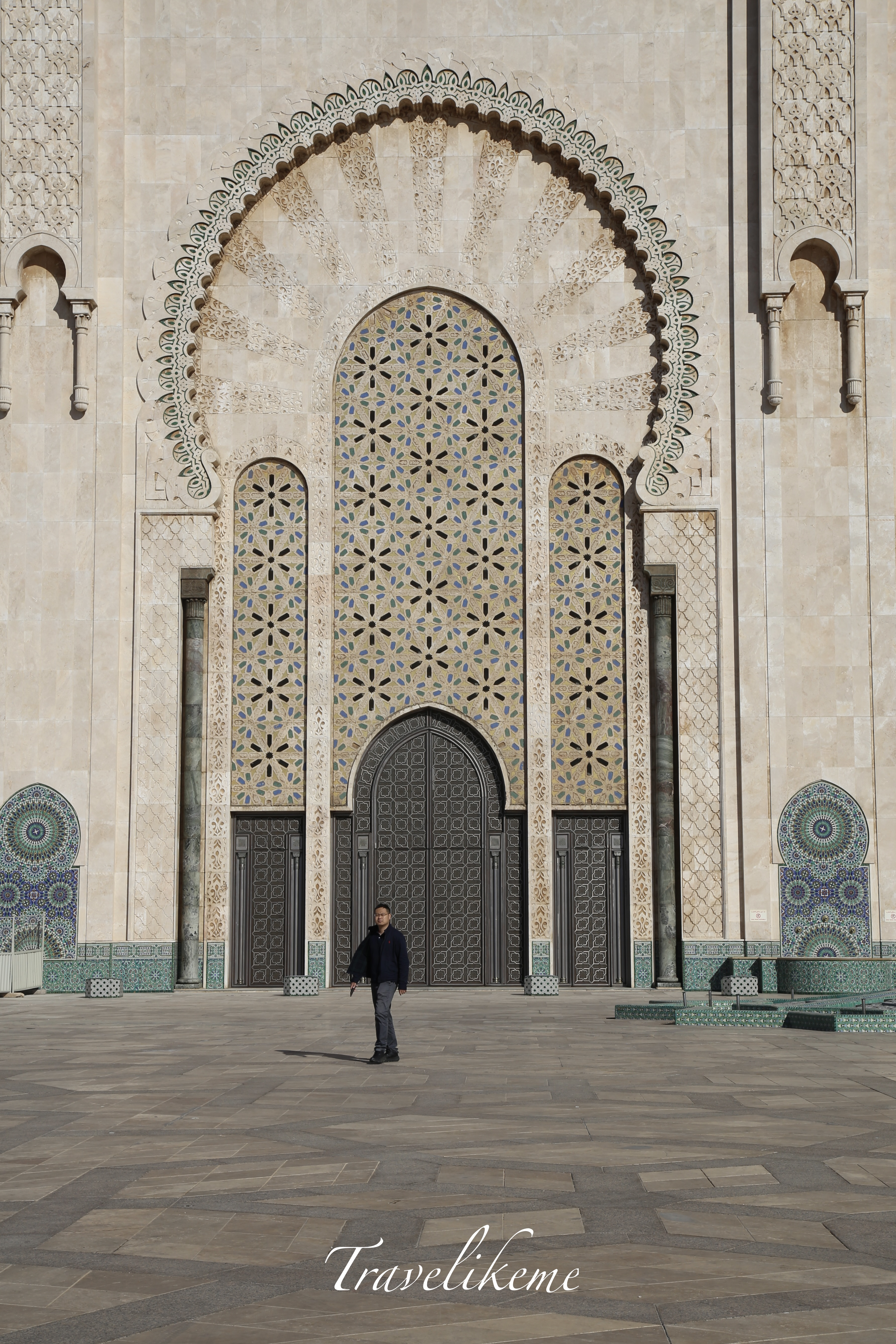
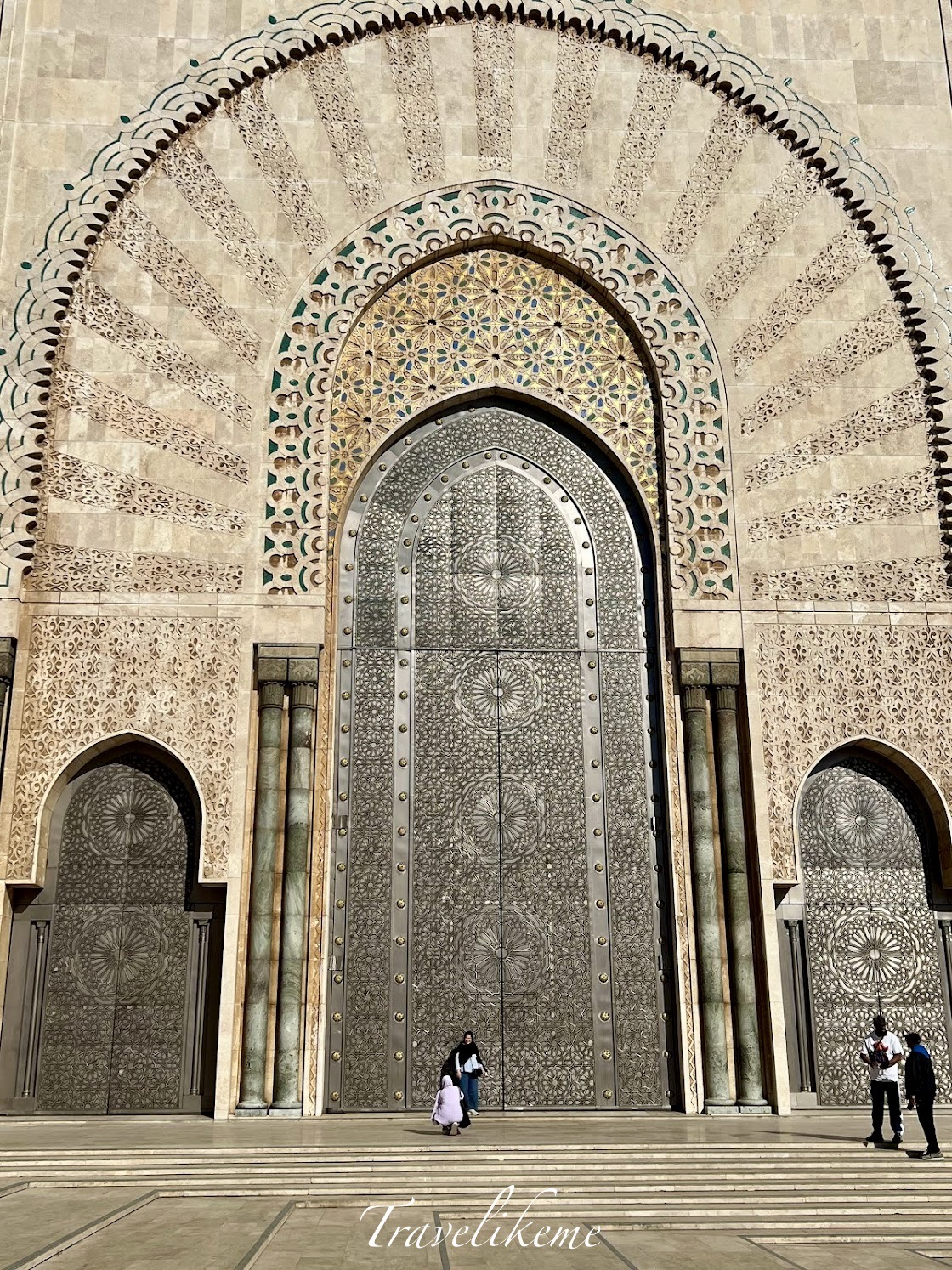
Traditional mosques have large monumental carved wooden doors at the main entrance. Here, humongous electrically operated Titanium doors are used instead because the mosque is by the sea and the wooden doors would be worn out quickly and need to be changed after some years. Thus the Titanium doors help to cut the expense and tedious labour.
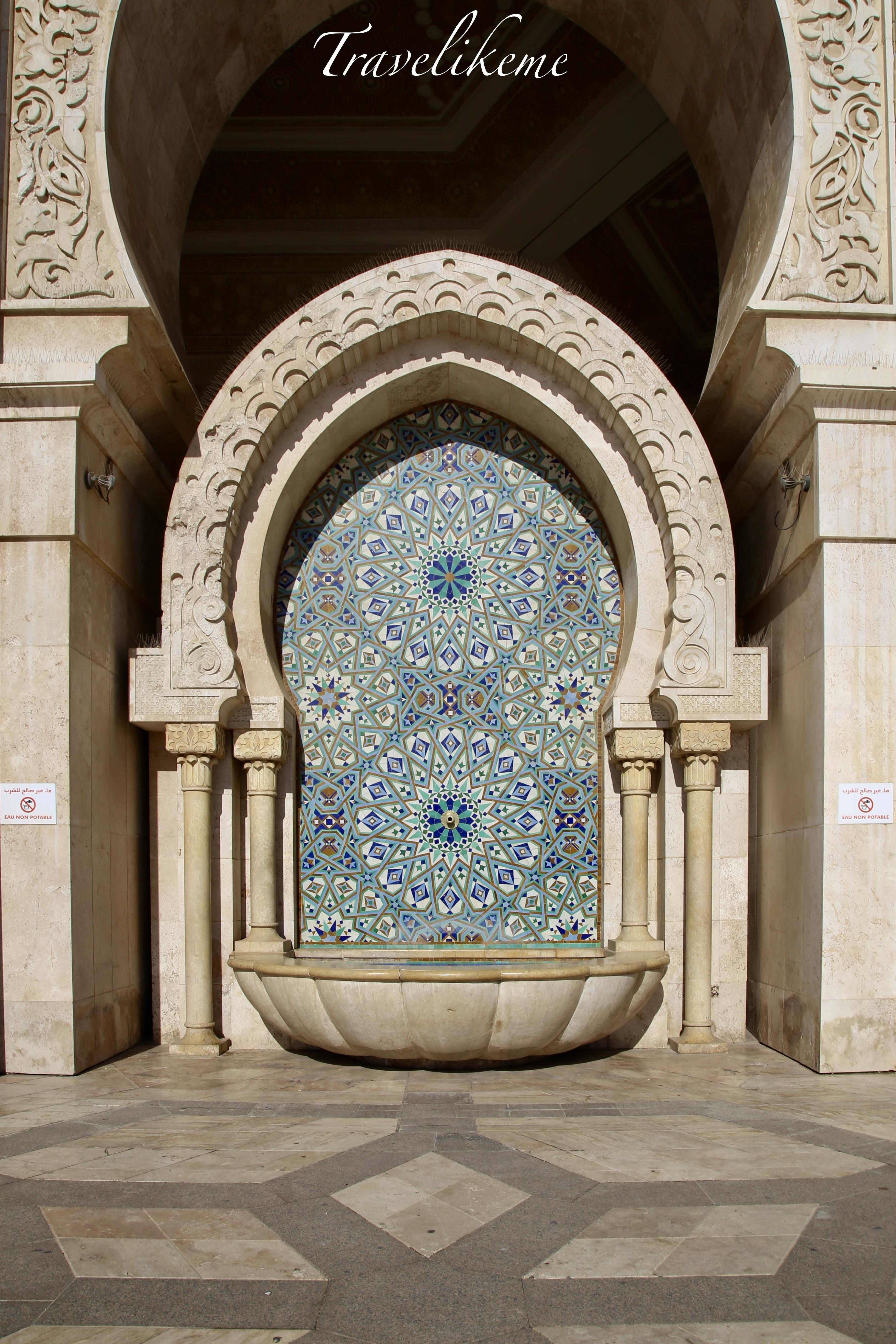
Water fountains are ubiquitous in Moroccan houses and here in the Mosque complex, there are altogether 41 such beautifully decorated ones. This is the main entrance to the Prayer hall and unfortunately the sprinkler fountain is not working today or it would definitely enhance the appearance of this fountain courtyard significantly. Materials used on exterior of the building include Granite, Titanium and Bronze.
Religious Islamic art eschews the depiction of figures and uses extensively calligraphic, geometric and abstract floral patterns or arabesques.
Hassan II commissioned French architect Michel Pinseau who lived in Morocco to design the mosque complex which was undertaken by the civil engineering group Bouygues. Work commenced on 12 Jul 1986 and construction was over a seven year period. It was finally inaugurated on 30 Aug 1993 on the eve of the Anniversary of Prophet Muhammad’s birth and dedicated to the King of Morocco.
The construction of this mammoth mosque amounted to €585 million and it was a feat for a lower mid-income country at that time. The government could not support such an ambitious project, so funds was raised through public subscriptions, business establishments, other countries and construction loans taken from western countries which have since been repaid.
Due to its strategic location, Morocco has been influenced by many cultures throughout the years. For centuries the country was formed by a mixture of African tribes from the other side of the Sahara desert, Islamic traditions from Arab neighbours and European colonizers. All these factors help to shape the country’s unique architectural style.
The Prayer hall in the mosque has a capacity for 25,000 worshippers and the outer plaza can accommodate another 80,000. A first class sound system is discreetly hidden but would serve the devotees well even if they are outdoors.
Design elements of Moroccan architecture have a strong Islamic influence as seen in the elaborate geometric patterns, ornamental Islamic calligraphy of Quranic verses and the extensive use of colourful Zellige ceramic tiles.Open courtyards with lavish gardens can be found in the centre of most buildings and they were places constructed for privacy and relaxation.
It basically took around 1400 men working by day and another 1100 working by night and 6,000 Moroccan artisans who worked for 5 years to create the abundant and beautiful mosaics, stone and marble floors and columns, sculpted plaster holdings, carved and painted wooden ceilings we see here.
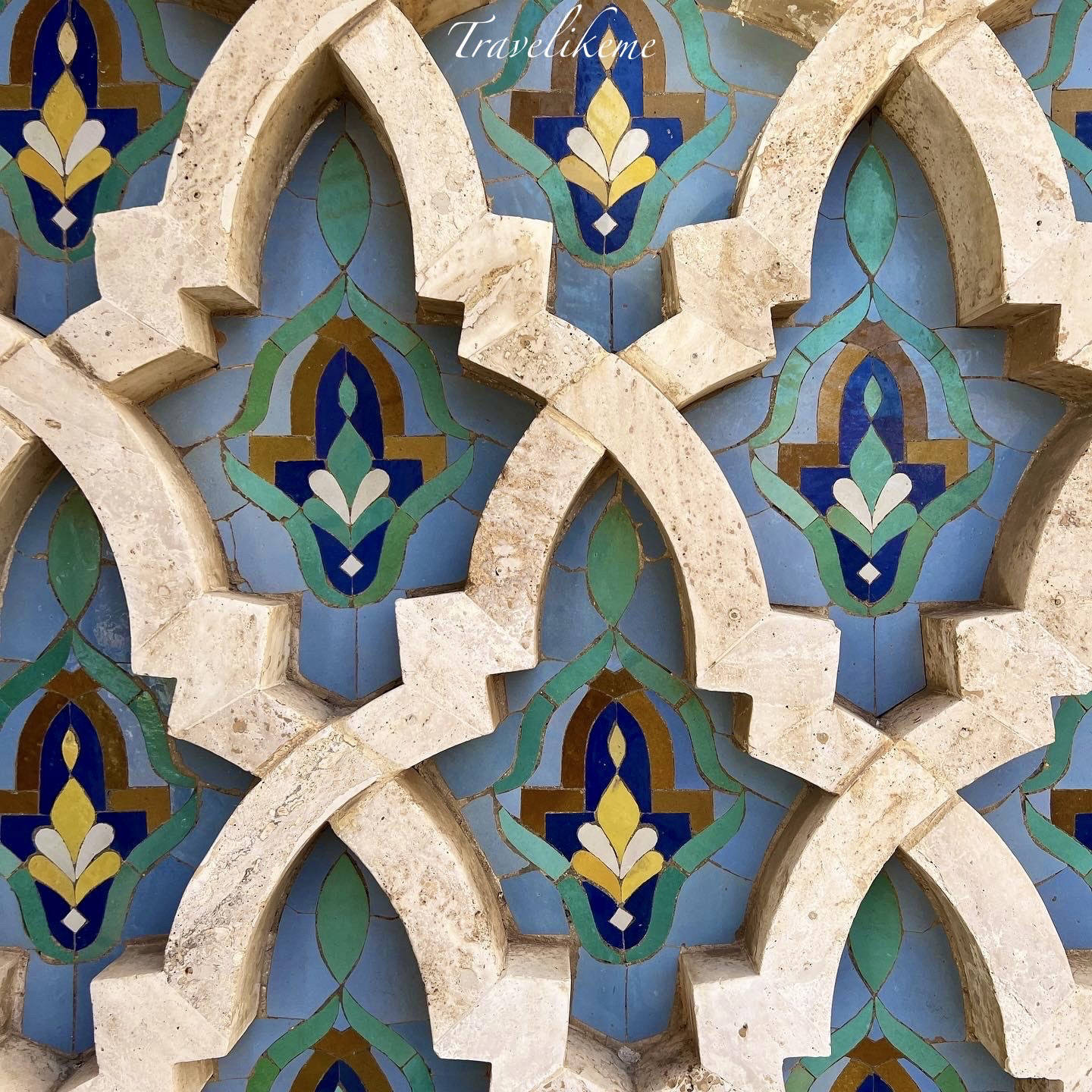
A close up of the 3 dimensional Zellige mosaic where you can see how intricate and painstaking it is to put together the bits and pieces to get this colourful and beautifully adorned wall.
As you can see no expense nor effort was skimped to make the Hassan II Mosque such a grandiose and monumental structure that would have most of us to gasp in awe at the sheer scale and unstated beauty that it displays.
Due to time constraints I was not able to enter the Mosque to feast my eyes on the magnificent interior and look out to the Atlantic Ocean through the glass wall. Perhaps this calls for a revisit to Casablanca sometime!
 travelikeme